If you’re running a free-to-play mobile game, here’s a number worth sitting with: somewhere between 95 and 98 percent of your players will never spend a single dollar in your app. Not because they don’t enjoy the game, many of them are your most loyal daily users, but because they simply aren’t buyers. They never were, and no amount of optimized IAP pricing or limited-time bundles will change that.
Most studios respond to this reality by leaning harder on ads. Rewarded video, interstitials, banners, a well-tuned ad stack can do a lot. But even the best setups leave a gap: the players who are too engaged to churn, too committed to ignore, and too stubborn to pay. They’ll watch your rewarded videos. They just won’t open their wallets.
That gap has a solution most studios underestimate, and in some cases, haven’t tried at all.
The monetization gap most mobile games ignore
- Across free-to-play mobile games, roughly 95–98% of players never make an in-app purchase. That figure has stayed remarkably stable over the past decade; multiple industry reports, including data from AppsFlyer and Sensor Tower, place the paying-user share at 2–5% depending on genre and geography.
- For studios that rely exclusively on IAP, the math is simple: nearly all of their active player base generates zero direct revenue. The entire business model rests on a thin slice of spenders, and the cost of acquiring those spenders keeps climbing. Median CPI for mobile games in the US sat above $3.50 in 2024, according to Liftoff benchmarks, meaning studios pay to bring in users who overwhelmingly never pay back.
- Ad monetization (interstitials, banners, rewarded video) partially closes this gap. But each format has friction:
- Interstitials interrupt gameplay. They generate eCPMs in the $8–$15 range for US traffic (estimated) but push down session length and increase churn when served too frequently.
- Banners sit in the background with eCPMs often below $1, contributing little relative to the screen space they consume.
- Rewarded video performs better. Users opt in, engagement is higher, and eCPMs can reach $15–$30 in strong markets. But supply is capped by how many video placements a game can offer before rewards inflate the economy.
- Even a well-tuned ad stack leaves a revenue layer untouched: the long-session, non-spending players who are willing to do more than watch a 30-second clip but will never enter a payment flow. That gap between what rewarded video captures and what IAP captures is where offerwalls operate.
Why in-game offerwalls work better than you’d expect
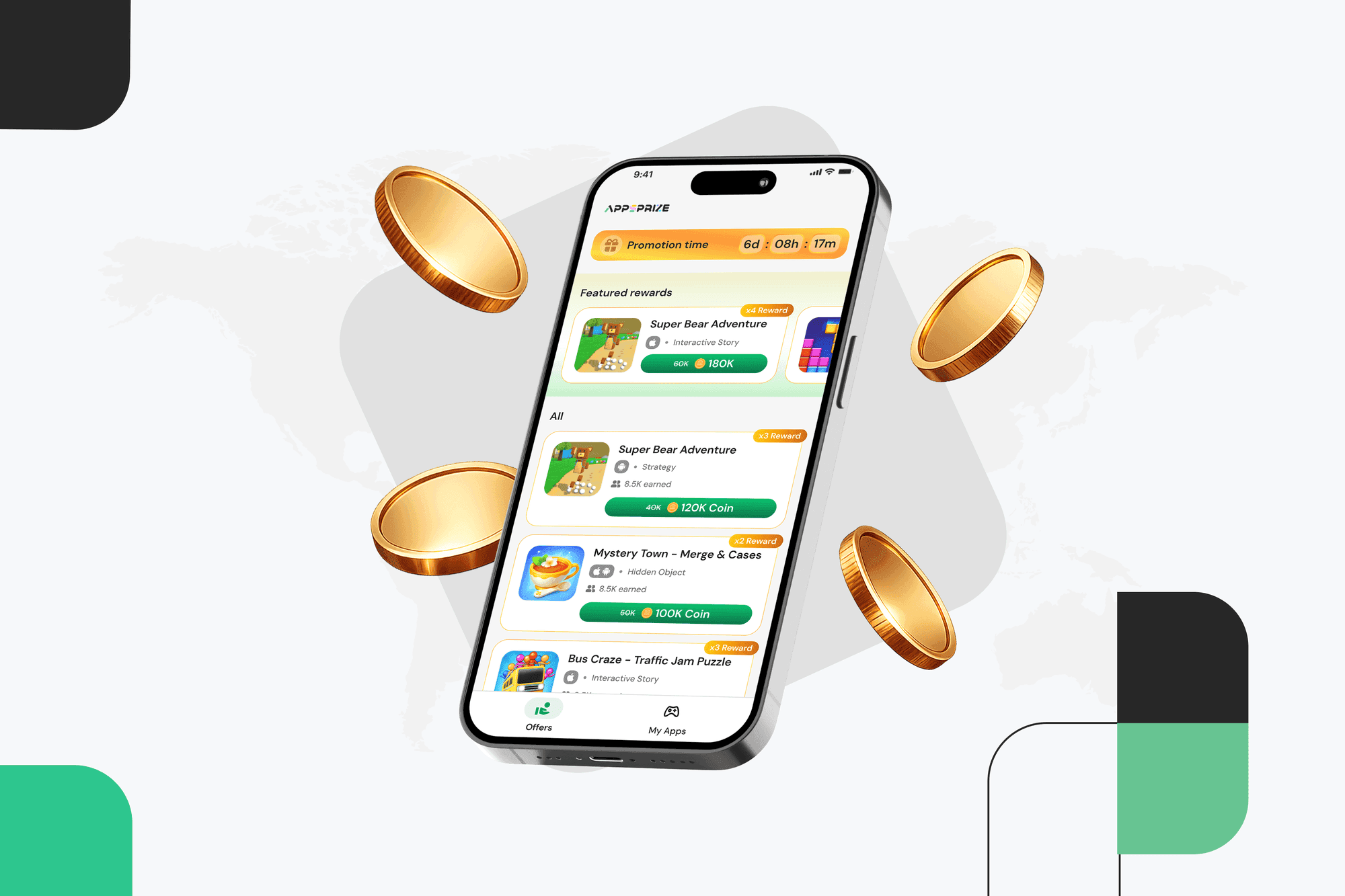
An offerwall presents players with a list of tasks; install an app, complete a survey, reach level 10 in another game, sign up for a free trial, and pays them in the host game’s virtual currency when they finish. The player picks which offers to engage with, decides when to start, and earns rewards that would otherwise cost real money. No forced interruption. No passive viewing. The user does actual work, and the publisher gets paid by the advertiser behind each offer.
This opt-in structure changes the economics in 2 ways that matter.
- Higher revenue per engagement
Because offerwall tasks require meaningful effort, minutes or hours rather than 15–30 seconds, advertisers pay more per completion. Effective eCPMs for offerwalls typically range from $30 to $200+ for US traffic, depending on offer type and completion difficulty. That’s a wide band, but even the lower end sits above what most rewarded video placements deliver. The reason is straightforward: an advertiser paying for a user who reaches level 10 in their game is buying a deeply engaged lead, not a fleeting impression. They price accordingly.
Offer completion rates vary by placement and reward value, but well-integrated offerwalls see 15–30% of users who open the wall completing at least one offer (estimated, based on industry aggregates). That’s a smaller share than the near-100% completion rate of a rewarded video clip, but the revenue per completed action is an order of magnitude higher.
- Retention effects that run counter to expectations
The common concern is that offerwalls pull players out of the game. They do, but temporarily. A user might leave to install and play a second game for 20 minutes. But the reward waiting in the host game creates a pull-back mechanism. Players return to claim currency, spend it, and re-engage with the economy.
Several publishers have reported that offerwall users show equal or slightly higher D7 and D30 retention compared to non-offerwall users within the same non-paying cohort. The likely mechanism: virtual currency earned through offerwalls lets players experience premium content; items, upgrades, progression boosts, they’d otherwise never access. That taste of premium content extends their lifecycle in the game.
Compare this to interstitials, which actively erode retention when frequency rises. Offerwalls generate more revenue per touchpoint, require no interruption of gameplay, and give the player a reason to come back.
What this looks like in practice
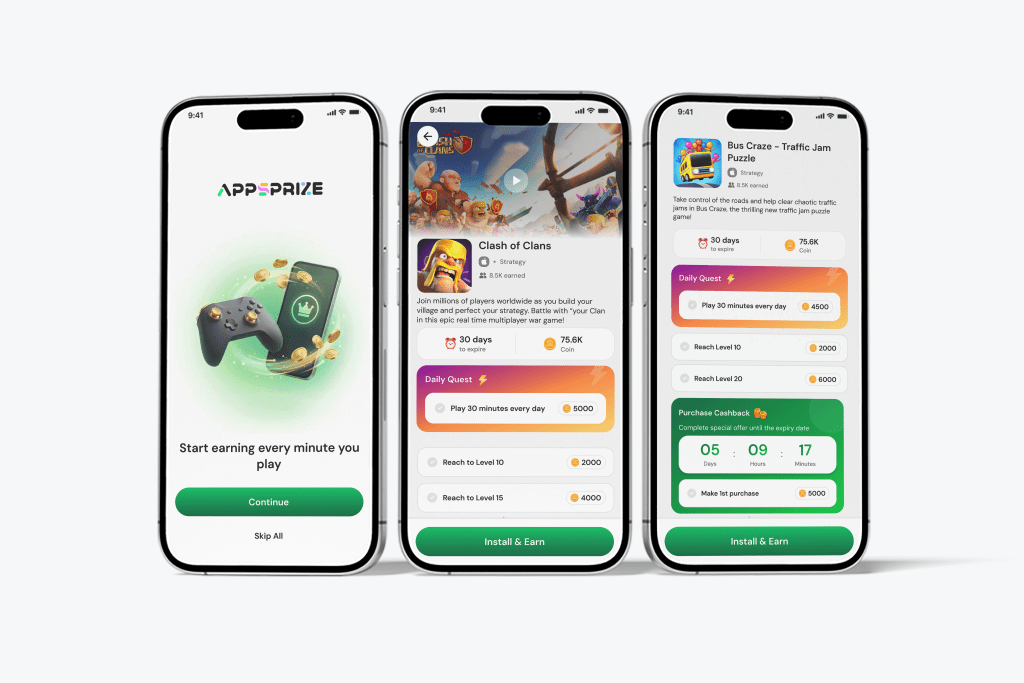
An offerwall usually lives behind a dedicated button or tab inside the game’s store or reward center, not layered over gameplay. The player opens it voluntarily, browses a list of offers (install an app, reach level 10 in another game, complete a survey), picks one, and completes the task outside the host game. Once the offer provider confirms completion, the player receives the promised in-game currency or item.
- Placement
The most common placements are:
-
- Currency store. A tab or banner inside the shop where players normally buy premium currency. This catches users at the moment they want currency but aren’t ready to pay cash.
- Reward center. A standalone section accessible from the main menu, sometimes marked with a badge or notification dot to signal new offers.
- Triggered prompt. A soft prompt that appears after a failed attempt or when a player lacks the currency to buy an upgrade, “Earn free gems” rather than a hard paywall.
Studios that bury the offerwall 3 menus deep typically see low discovery rates. Those that surface it at natural friction points, without interrupting a session, report higher engagement per daily active user.
- Reward calibration
Getting the payout right matters more than placement. If rewards are too low, players ignore the wall. If rewards are too generous, they undercut IAP sales. A common calibration approach: set the offerwall’s effective exchange rate at roughly 70–80% of the IAP rate for the same currency. A player spending $1 in the store might get 100 gems; completing an offer worth $1 in eCPM might yield 70–80 gems. This keeps IAP attractive while still giving non-payers a meaningful reason to engage.
- The completion loop
After a player picks an offer, a tracking link hands them off to the advertiser’s app or landing page. Postback callbacks confirm task completion, usually within minutes for simple installs, or days for engagement-based offers like “reach level 15.” The reward is credited automatically. Studios that show a confirmation notification as soon as the player returns to the game see higher repeat engagement with the wall, because the feedback loop feels immediate and reliable.
The player segments that make offerwalls profitable
Offerwall revenue doesn’t come evenly from your entire player base. It concentrates in a specific slice, users who play regularly but never open the in-app purchase store. Understanding who these players are changes how you think about placement and offer selection.
- The mid-engagement, zero-spend user
The highest-value offerwall users typically share 3 traits:
- Session frequency: They log in 4–7 days per week, often multiple times per day.
- Spending history: They have never made an IAP, and based on historical patterns, they probably never will.
- Progression motivation: They want to advance but hit currency walls. They’re willing to trade time and attention for rewards rather than quit.
This group sits between casual players (who churn before encountering an offerwall) and whales (who skip the offerwall because purchasing is faster). Industry estimates put this segment at roughly 15–25% of a game’s DAU, depending on genre and progression design.
- Why they behave differently from rewarded-video users
Rewarded video appeals broadly, even low-engagement users will watch a 30-second ad for a small bonus. Offerwall tasks require more effort: installing an app, reaching level 10 in another game, completing a survey. That friction filters out disengaged users and selects for players who are invested enough to spend 5–20 minutes earning a reward.
The result is a self-selecting audience with higher session depth and longer lifetime. These users complete offers at rates between 15–30% (estimated, varies by offer type and reward value), and their post-completion retention tends to stay flat or improve, likely because the earned currency re-engages them with content they’d otherwise have abandoned.
Treating this segment as a distinct monetization audience, separate from your IAP buyers and your casual ad viewers, is what makes offerwall economics work.
A new channel, not a replacement
Offerwalls don’t cannibalize IAP revenue because they target a fundamentally different audience, users who weren’t going to spend money in the first place. The overlap between offerwall engagers and paying users is typically small. Studios that segment their data usually find that offerwall completions come overwhelmingly from players who have zero purchase history.
The same logic applies to rewarded video. Rewarded video works best as a high-frequency, low-effort exchange: watch 15–30 seconds, get a small reward. Offerwalls ask for more, such as installing an app, reaching level 20 in another game, or completing a survey, and they pay out proportionally larger rewards. The 2 formats serve different moments in a player’s session and different levels of commitment, which is why they fit so well into a broader mobile game monetization strategy.
When integrating offerwalls alongside existing monetization, studios should keep a few things in mind:
- Reward economy balance. Offerwall payouts should be generous enough to motivate completion but not so large that they devalue IAP bundles. Run the math on your hard-currency pricing before setting exchange rates.
- Placement matters. Offerwalls perform best when surfaced at natural “I need currency” moments, such as failed upgrade attempts or shop visits with insufficient balance, rather than as a passive icon buried in a settings menu.
- Don’t gate IAP users out. Let everyone see the offerwall. Payers occasionally engage with it too, and restricting access adds complexity without a clear benefit.
The framing is straightforward: offerwalls are a third revenue channel that reaches the segment your other formats miss. They won’t replace anything in your current stack. They fill the gap between “never pays” and “never monetized.”