Casual Mobile Games Aren’t Reinventing the Formula, They’re Perfecting It
The biggest casual mobile games today are proving an important point: success does not always come from creating something completely new.
Instead, many of the most downloaded mobile games take familiar ideas (puzzle solving, sorting, coloring, and strategy) and refine them into experiences that feel instantly enjoyable. They remove friction, create satisfying gameplay loops, and build progression systems that keep players returning.
This shift reflects a broader trend in the mobile gaming industry. Players are not necessarily looking for more complicated games. They are looking for experiences they can understand quickly, enjoy immediately, and return to whenever they have a few minutes.
The best casual games combine three things:
Simple mechanics that anyone can understand
Progression systems that create long-term engagement
Monetization strategies that support the player experience
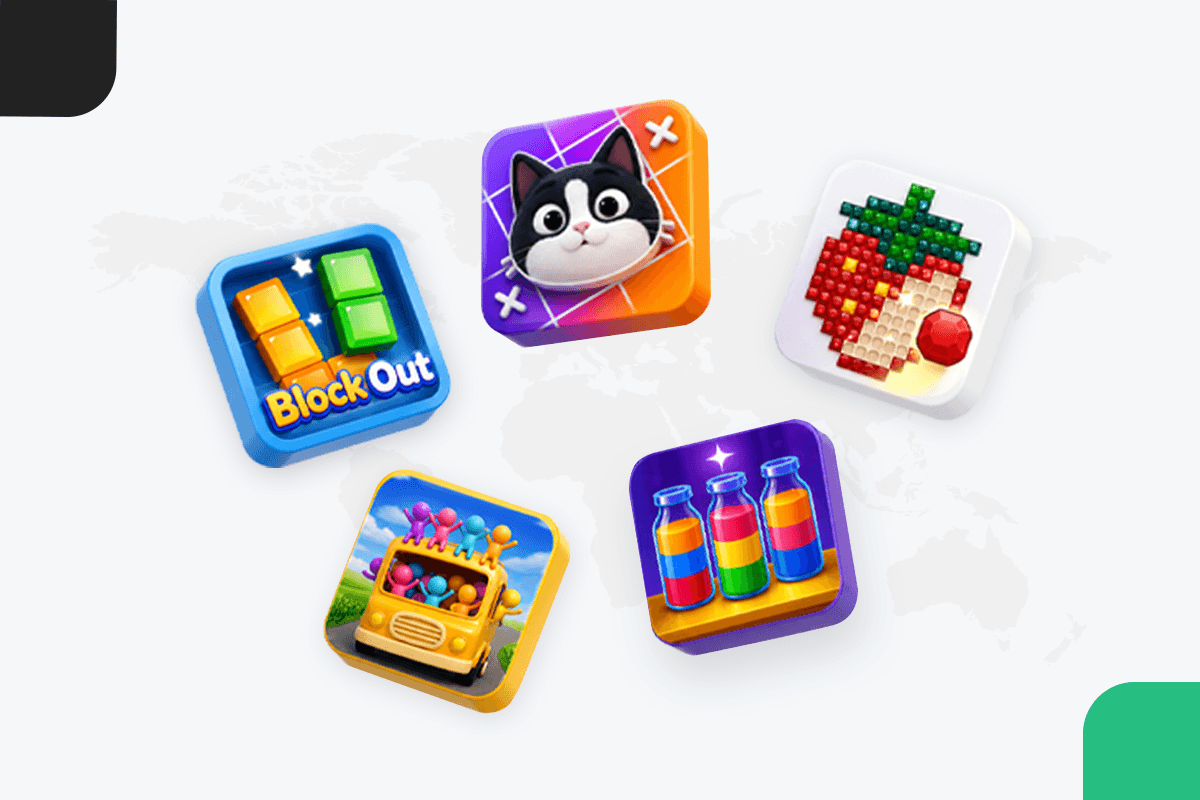
In this article, we look at five of the most downloaded casual mobile games; Block Out, Meowdoku, Bus Traffic Fever, Magic Sort, and Jewel Coloring, to understand what makes them successful and what developers can learn from their design choices.
1. Block Out: Turning Grid Management Into a Satisfying Puzzle Loop
What makes it stand out
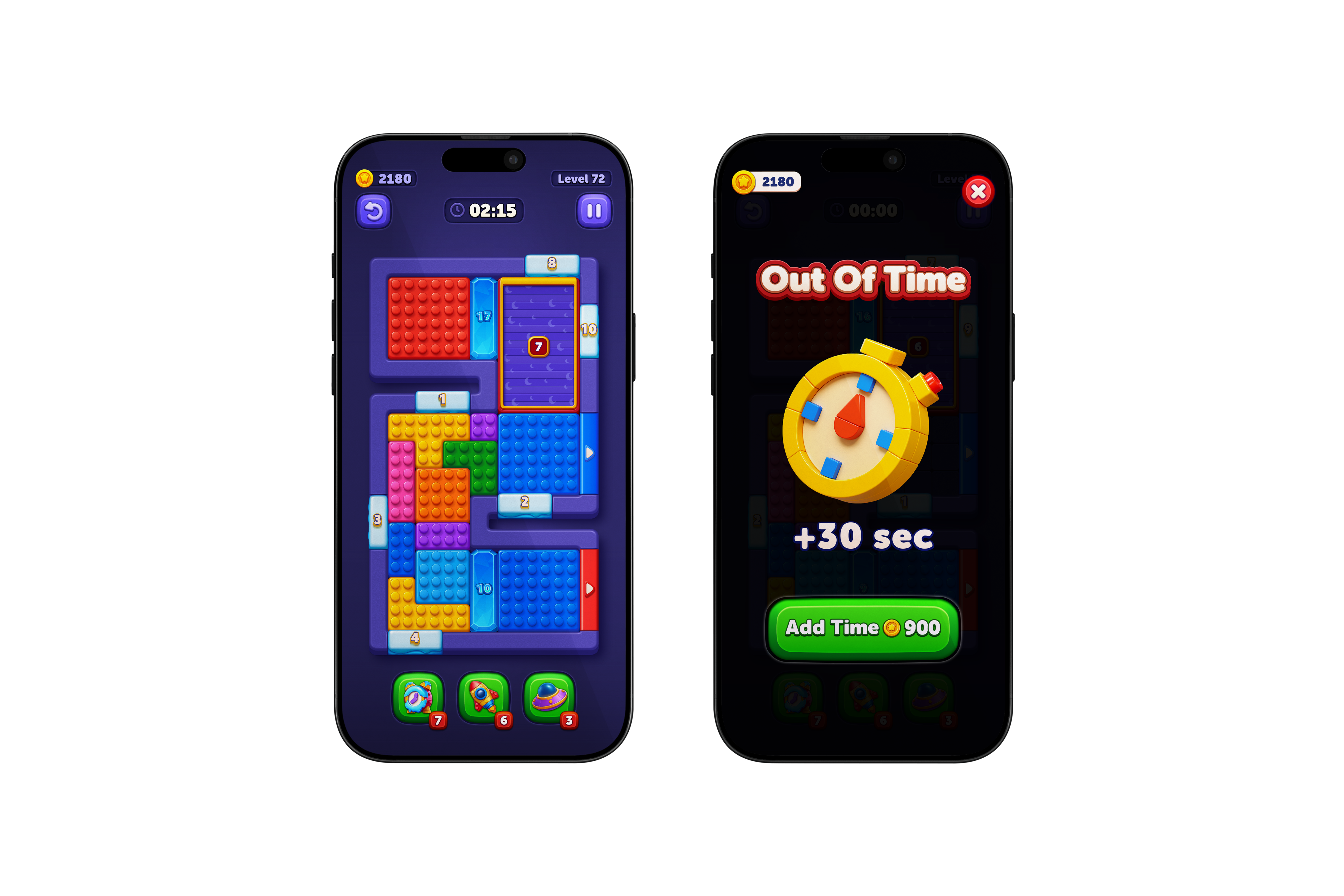
At first glance, Block Out looks like a simple block puzzle, but its strength comes from how it uses grid management as the core challenge.
The player is not just matching pieces or clearing space. They need to understand the relationship between blocks, available movement paths, and future decisions. Every move affects the remaining space on the grid, creating a constant balance between immediate progress and long-term planning.
This is a mechanic that casual players understand instantly because it builds on familiar puzzle ideas: placing blocks, managing limited space, and finding the optimal solution. However, the difficulty comes from thinking several moves ahead.
The game succeeds because it turns a simple grid into a strategic playground.
Gameplay loop and retention
The core loop is simple:
Analyze the grid → move blocks into the correct position → clear the puzzle → unlock the next challenge
The first levels teach players the rules naturally, but later stages introduce more complicated layouts that require better planning.
This gradual increase in complexity is one of the biggest reasons block puzzle games perform well on mobile. Players feel like they are improving, not just completing levels.
Another important retention factor is the short session structure. Each puzzle provides a complete sense of achievement, making it easy for players to return for another challenge.
Monetization
Block Out follows the monetization pattern common in successful puzzle games. When players encounter harder grids, optional tools such as boosters, extra moves, or rewarded ads can help them continue.
The important part is timing. These options appear when players already understand the value of progressing.
Key takeaway:
Block Out shows how a simple block puzzle can become engaging when the real challenge comes from strategic grid management rather than the mechanic itself.
2. Meowdoku: Bringing a Viral Logic Puzzle Format to Casual Players
What makes it stand out
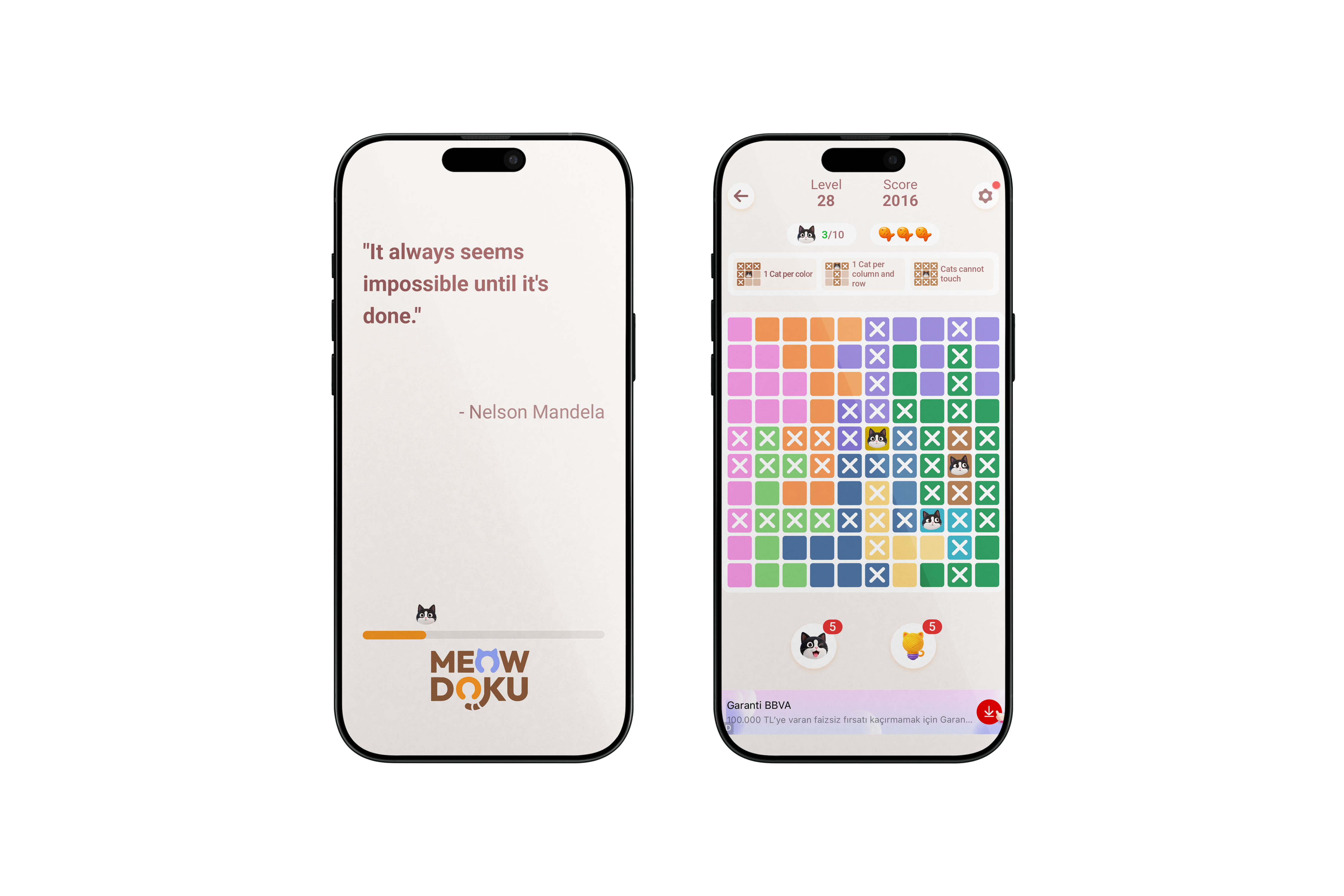
Meowdoku is not a completely new puzzle mechanic. Its foundation comes from the logic puzzle Queens, the daily puzzle game launched by LinkedIn in 2024 that gained popularity through social sharing, daily solutions, and players posting their victories, and frustrations, online.
Meowdoku takes that proven logic format and gives it a mobile-friendly, cat-themed identity.
This is a smart move because it combines two powerful casual game trends:
Familiar puzzle rules that players immediately understand
A strong emotional theme that makes the experience more approachable
The cat theme is not just cosmetic. It changes the feeling of the game. A traditional logic puzzle can feel serious or intimidating, while Meowdoku creates a lighter, more playful experience. Even the wellness quotes that pop up at the beginning of gives you a feeling of relaxation from the beginning.
Gameplay loop and retention
The gameplay is built around deduction.
Players need to place cats correctly on the grid while following specific rules. Each puzzle starts simple but gradually requires more careful reasoning.
The appeal comes from the “aha!” moment. Players are not rewarded because they completed a repetitive action, they are rewarded because they solved a problem.
This creates a different type of retention compared to many casual games. Instead of chasing constant rewards, players return because they want to prove they can solve the next challenge.
The daily puzzle format also supports habit-building. Similar to Wordle and other viral puzzle games, players develop a routine around coming back regularly.
Monetization
Logic puzzle games usually perform best when monetization does not interrupt concentration.
Hints, additional puzzles, and optional features provide value while keeping the core solving experience intact.
Key takeaway:
Meowdoku shows that successful casual games do not always need a new mechanic. Sometimes, adapting a proven idea with the right theme and emotional hook is enough.
3. Bus Traffic Fever: Combining Parking Jams, Color Sorting, and Conveyor Belt Mechanics
What makes it stand out
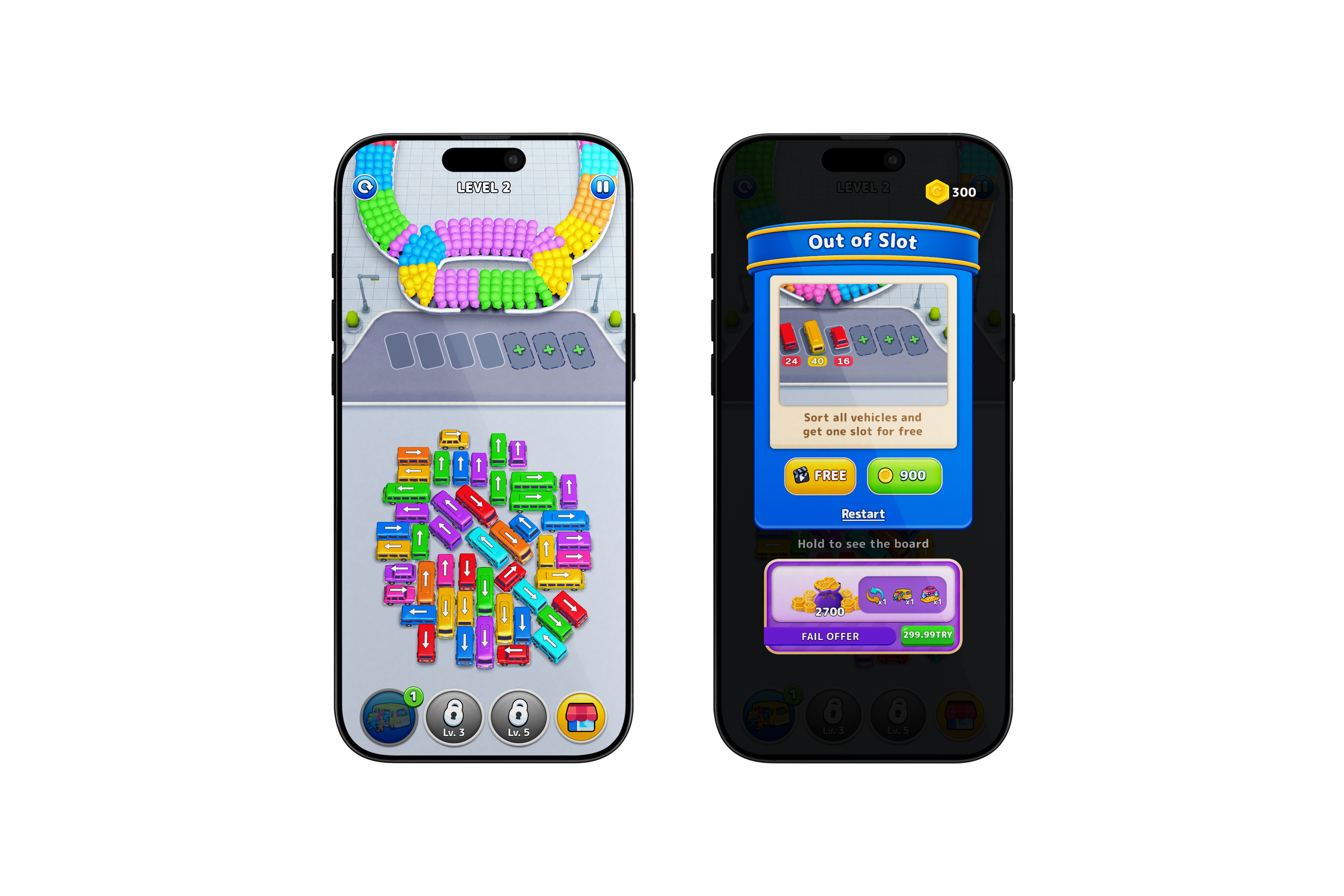
Bus Traffic Fever stands out because it successfully combines several popular casual mechanics into one experience.
At its core, the game mixes:
Parking jam puzzles
Color sorting
Conveyor belt mechanics
Each of these mechanics has already proven successful individually, but combining them effectively is the difficult part.
The conveyor belt mechanic is especially interesting because it has recently gained popularity through games like Pixel Flow, where players interact with moving systems and need to make decisions based on timing and order.
Bus Traffic Fever is one of the few games that has successfully integrated this mechanic into a broader puzzle experience instead of using it as a standalone gimmick.
Gameplay loop and retention
The player’s goal is to manage movement, match colors, and clear obstacles in the correct sequence.
The challenge comes from planning ahead.
Sending the wrong bus or moving objects too early can create a traffic problem that blocks future moves. This creates the same satisfaction found in classic parking puzzle games: the player needs to visualize the solution before taking action.
The combination of movement, colors, and timing also creates strong visual feedback. Seeing buses leave, passengers move, and the board clear gives players constant progress signals.
Monetization
The game follows a hybrid casual approach with boosters, extra moves, and rewarded ads helping players overcome difficult levels.
Because failure often happens after players understand the solution but make a mistake, optional help feels valuable.
Key takeaway:
Bus Traffic Fever demonstrates that combining proven mechanics can create a fresh casual experience when every mechanic contributes to the same gameplay goal.
4. Magic Sort: The Endless Appeal of Liquid Sorting Puzzles
What makes it stand out
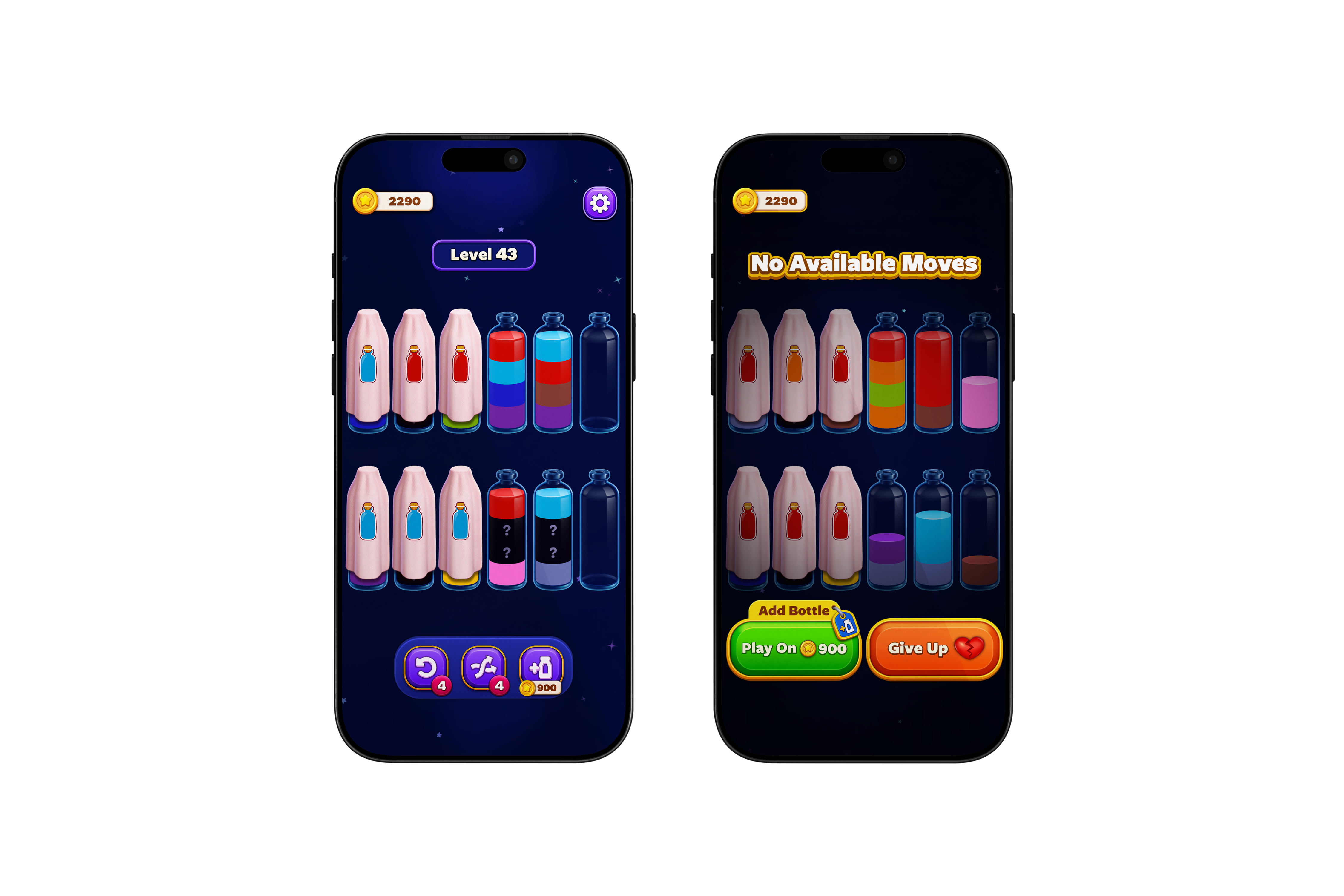
Magic Sort builds on one of the most recognizable puzzle mechanics in mobile gaming: the classic water sort puzzle.
The concept is simple:
Players pour colored liquid between containers until each container contains only one color.
The mechanic became popular because it creates an immediate understanding of the goal. Players do not need instructions, they see the problem and naturally want to solve it.
Despite its simplicity, the mechanic creates surprisingly deep decision-making. A single wrong pour can limit future options, forcing players to think ahead.
Gameplay loop and retention
The satisfaction comes from transforming a messy state into an organized one.
Players begin with multiple colors mixed across containers. Step by step, they create order until every container is complete.
This type of gameplay taps into a powerful psychological reward: completion.
The same reason people enjoy organizing objects in real life applies here. The player starts with chaos and ends with a perfect solution.
As levels progress, additional containers and more complex arrangements increase difficulty while keeping the original mechanic intact.
Monetization
Magic Sort benefits from a natural monetization opportunity.
When players get stuck, boosters or additional options become valuable because they solve an immediate problem.
The best part of this model is that purchases are connected directly to gameplay frustration, not random offers.
Key takeaway:
Magic Sort proves that a simple mechanic can remain highly engaging when it delivers a satisfying transformation from disorder to completion.
5. Jewel Coloring: Combining Sorting, Pixel Art, and Relaxation
What makes it stand out
Jewel Coloring takes a different approach from traditional puzzle games. Instead of challenging players with difficult decisions, it focuses on relaxation and creative satisfaction.
The mechanic combines:
Sorting scattered colored gems into matching zones
Filling a grid-based picture
Revealing pixel art underneath
Players gradually uncover an image as they correctly place gems, creating a satisfying sense of progress.
The appeal comes from the transformation. The player starts with a messy, incomplete board and slowly reveals a finished artwork.
Gameplay loop and retention
The gameplay is intentionally simple:
Match gems → fill the grid → reveal the picture → unlock new artwork
There is no timer and no single correct solution. Players can progress at their own pace by tapping, dragging, and completing sections.
This low-pressure design makes the game accessible to a wide audience.
Unlike competitive puzzle games, Jewel Coloring creates engagement through relaxation. Players return because the experience is calming and satisfying, not because they are trying to beat a difficult challenge.
The pixel-art reveal also creates a strong completion loop. Players want to see what image appears next.
Monetization
The monetization approach fits the relaxing nature of the game.
Additional artwork, customization options, and convenience features can provide value without disrupting the core experience.
Rewarded ads also work naturally because players can choose whether they want additional content or faster progress.
Key takeaway:
Jewel Coloring shows that casual success is not always about challenge. Sometimes, creating a relaxing and satisfying routine is the strongest retention strategy.
What These Top Casual Mobile Games Have in Common
1. They are easy to understand
Successful casual games remove barriers. Players should know what to do within seconds.
2. They create satisfying feedback
Animations, progression, rewards, and completion moments make simple actions feel meaningful.
3. They introduce complexity gradually
The best casual games start simple and become deeper over time instead of overwhelming players immediately.
4. They monetize around player needs
The strongest mobile game monetization strategies do not interrupt gameplay. They appear when players see value in continuing.
Final Thoughts
The most downloaded casual mobile games today don’t necessarily have the most complicated mechanics or visuals. They are the ones that understand player psychology.
Block Out succeeds through polished puzzle progression. Meowdoku turns logic into a relaxing experience. Bus Traffic Fever combines familiar mechanics into a deeper gameplay loop. Magic Sort shows how progression and monetization can work together. Jewel Coloring proves that simple, calming experiences can create strong engagement.
For mobile game developers, the lesson is clear: success comes from mastering the fundamentals. Create a gameplay loop that is easy to learn, satisfying to repeat, and supported by monetization that respects the player experience.
The future of casual gaming will likely not belong to the games with the most features. It will belong to the games that make players want to come back one more time.
Source: Sensor Tower Top Charts, App Store, US, Games/Casual, 2026/08/28