Hybrid-casual games are titles that blend the frictionless onboarding of hyper-casual with the progression systems, meta-layers, and monetization depth of mid-core. They have quietly become the most strategically interesting genre in UA today. Downloads are competitive with hyper-casual, but LTV curves look closer to casual RPGs. For growth marketers, that combination changes everything.
This playbook covers what you need to know to build a UA engine specifically tuned for hybrid-casual: targeting, pricing models, creative strategy, retention benchmarks, and why rewarded UA fits this genre better than almost anything else in the market. Let’s go!
What Makes Hybrid-Casual Different
Hyper-casual UA was a volume game. You optimized for the lowest possible CPI, pushed massive scale, and relied on ad revenue to carry monetization. Retention was almost an afterthought, Day 1 rates of 35–40% were acceptable because the margin per user was thin and you needed millions of installs to make the math work.
Hybrid-casual breaks that model in every direction. These games have:
- Deeper progression loops, skill trees, base building, character upgrades, seasonal content
- Higher IAP potential, players invest emotionally and financially over weeks or months
- Better retention floors, Day 7 benchmarks in the 15–22% range vs. 8–12% for pure hyper-casual
- More diverse monetization, IAP, rewarded ads, battle passes, and offerwall revenue coexist
That complexity means you need users who will actually engage with the depth. Chasing volume at the lowest CPI will fill your funnel with players who bounce after two sessions. The genre demands a more intentional UA strategy from day one.
Targeting Strategy: Finding Players Who Actually Stay
Shift from Behavioral to Psychographic Signals
In hyper-casual, broad demographic targeting with creative-led optimization was usually sufficient. In hybrid-casual, you need to think about player psychology. Your best users share specific behavioral traits: they’ve completed tutorials in other games, they engage with limited-time events, they make small in-app purchases early. These are signals worth bidding on.
Platform-specific targeting priorities:
- Meta (Facebook/Instagram): Use value-based lookalikes seeded from your top 5–10% of LTV users, not your full install base. Broad install volume creates a diluted seed audience. Segment buyers from non-buyers before you build lookalikes.
- Google UAC: Let the algorithm run with as few restrictions as possible, but feed it high-quality conversion events. Don’t optimize for installs, optimize for Day 3 retention or first purchase if you have volume.
- AppLovin/ironSource: These networks perform especially well for hybrid-casual because their player graphs skew toward engaged mobile gamers who have mid-core history. Use ROAS bidding once you have enough data.
- TikTok: Growing fast for this genre, particularly with younger demographics. Creative testing velocity matters more here than precise audience sculpting.
Contextual Targeting for Genre-Adjacent Players
One of the most underutilized strategies in hybrid-casual UA is targeting contextually adjacent genres. Players of merge games, idle RPGs, casual city-builders, and light strategy titles often have the cognitive profile for hybrid-casual even if they haven’t played your specific genre before. Build custom audience segments around these game categories before competitors lock up the inventory.
Geo Tier Strategy
Unlike hyper-casual, where Tier 3 geos often drove the majority of volume, hybrid-casual should weight more heavily toward Tier 1 and Tier 2 markets, not exclusively, but meaningfully. The IAP potential and LTV ceiling in the US, UK, Germany, South Korea, and Japan justify higher CPIs. Run Tier 3 volume campaigns in parallel for scale, but don’t let them contaminate your ROAS calculations.
Pricing Models: CPE vs. CPI, and Why the Answer Isn’t Simple
This is where hybrid-casual UA gets genuinely interesting from a commercial structure standpoint.
The Case for CPI
Cost-per-install is still the default for most UA campaigns, and it makes sense in early-stage games where you don’t have enough downstream data to optimize for events. CPI campaigns give you speed, scale, and broad network compatibility.
The problem for hybrid-casual: optimizing for CPI at scale will inevitably attract low-intent users. Networks are excellent at delivering installs cheaply. They’re less good at distinguishing between a user who will play for three months and one who will churn in 48 hours. When your game has real IAP potential, that distinction is worth a significant amount of money.
When to use CPI: Launch phase, geo expansion, creative testing at scale, networks without sufficient event optimization infrastructure.
The Case for CPE (Cost-per-Engagement)
CPE campaigns pay out when a user completes a specific in-game action, finishing a tutorial, reaching level 5, completing their first build, making a first purchase. For hybrid-casual, this is where the model gets compelling.
Because your game has multiple meaningful engagement thresholds (tutorial completion, first currency spend, first meta-layer unlock), you can structure CPE around the events that actually predict long-term retention. You’re not just buying an install, you’re buying a user who has demonstrated intent.
The tradeoff is cost. CPE rates are significantly higher than CPI, and some networks struggle to deliver volume at CPE pricing. But if your Day 30 LTV justifies it, paying more for higher-quality users is simply better math.
When to use CPE: When you have validated LTV data and can prove quality users are worth the premium. Ideal for rewarded UA and offerwall campaigns (more on this below). Also highly effective when you have a long game lifecycle and can amortize the higher upfront cost.
Hybrid Approach: CPI to Funnel, CPE to Optimize
The most sophisticated hybrid-casual UA programs use CPI for top-of-funnel scale and CPE as a quality filter and channel optimization signal. Run both in parallel, use CPE cohort data to inform your CPI targeting and creative, and gradually shift budget toward the channels where CPE economics make sense.
Target benchmarks to work with:
- CPI: $0.80–$2.50 for Tier 2/3; $2.50–$6.00 for Tier 1 (genre-dependent)
- CPE (tutorial completion): 1.5–2.5x your CPI
- CPE (first purchase): 4–8x your CPI, but cohort LTV should be 2–3x that within 30 days
Creative Best Practices for Hybrid-Casual
The Dual Creative Problem
Hybrid-casual games face a unique creative challenge: they need to communicate both accessibility (like hyper-casual) and depth (like mid-core) in the same ad. Lean too far toward accessibility and you attract users who churn when the meta kicks in. Lean too far toward complexity and you lose the broad audience that makes the economics work.
The best hybrid-casual creatives solve this with a two-stage narrative: hook with simplicity, reveal with depth.
The hook (first 3 seconds): Should feel instantly familiar and low-friction. Gameplay that anyone can understand, a merge mechanic, a simple puzzle, a satisfying build animation. Don’t open with UI complexity.
The revelation (seconds 4–15): Start introducing the layers. Show a base evolving, a character leveling up, a satisfying meta-loop completing. This signals to mid-core players that there’s more here than a time-killer.
Format Performance by Genre Segment
- Playable ads consistently outperform static and video for hybrid-casual because they let users experience the core loop directly. Invest in high-quality playables if your budget allows. Completion rates for hybrid-casual playables average 15–25% higher than equivalent video.
- UGC-style creative is growing fast, especially on TikTok and Meta. Authentic-feeling walkthroughs from “real players” convert well because hybrid-casual audiences are already accustomed to community content around games they love.
- Tutorial walkthrough videos work well for complex-ish hybrid-casual titles where the meta needs some explanation. Show the full journey from first session to advanced progression in 20–30 seconds.
Creative Testing Cadence
Hybrid-casual audiences get ad fatigue faster than mid-core (they’re exposed to more advertising volume) but slower than pure hyper-casual. A reasonable testing cadence is 4–6 new creative concepts per month per major channel, with 2–3 variations per concept. Kill underperformers at 1,000 impressions; scale winners fast before the creative window closes.
Retention Benchmarks: What Good Looks Like
Retention is the health metric that separates sustainable hybrid-casual titles from ones that burn through UA budget without building a player base. Use these benchmarks to calibrate your expectations and identify where you’re leaking users.
| Metric | Below Average | Average | Strong | Best-in-Class |
| Day 1 Retention | <35% | 35–45% | 45–55% | 55%+ |
| Day 7 Retention | <12% | 12–18% | 18–25% | 25%+ |
| Day 30 Retention | <5% | 5–9% | 9–15% | 15%+ |
| Day 1 ARPU | <$0.05 | $0.05–$0.12 | $0.12–$0.25 | $0.25+ |
| 30-Day LTV | <$0.40 | $0.40–$1.20 | $1.20–$2.50 | $2.50+ |
If your Day 1 is strong but Day 7 drops sharply, the meta-layer isn’t activating early enough, users complete the tutorial but don’t find the hook that brings them back. If Day 7 is solid but Day 30 falls off, your mid-game content wall has arrived before your monetization loops have converted users into invested players.
Retention Levers Specific to Hybrid-Casual
Early meta activation: The deeper engagement systems (base building, character progression, collection mechanics) should be introduced within the first 3–5 sessions, not buried after 10+ sessions. Players need to feel the pull of the meta before they form a habit.
Push notification strategy: Hybrid-casual players have higher opt-in intent than hyper-casual audiences because they actually care about their progress. Invest in personalized push based on where users are in the progression loop, not generic “Come back and play!” messages.
Soft currency balance: If players run out of soft currency before they understand the meta, they churn. Design your early economy so players always feel just slightly resource-constrained but never blocked.
Live ops cadence: Regular events (weekly at minimum) dramatically extend Day 30+ retention. Players who engage with at least one live ops event have 2–3x better 60-day retention than those who don’t.
Rewarded UA and Offerwalls: The Hybrid-Casual Advantage
Here’s where hybrid-casual has a structural advantage that is genuinely underappreciated in the industry.
Why Rewarded UA Works Better for Hybrid-Casual Than Hyper-Casual
Rewarded UA, where users complete in-app actions or spend time in games in exchange for in-game rewards in another app, might not be the best fit for hyper-casual. The reason is simple: hyper-casual games don’t have enough depth to motivate users to complete meaningful actions in an external app.
Hybrid-casual breaks this logic entirely. Because your game has real progression, real currencies, real rewards with genuine value to invested players, the offer becomes compelling. A player who has been building their base for two weeks will complete an external survey or trial offer to earn a pack of rare resources. The deeper the engagement loops, the more your in-game currency is worth to your existing players.
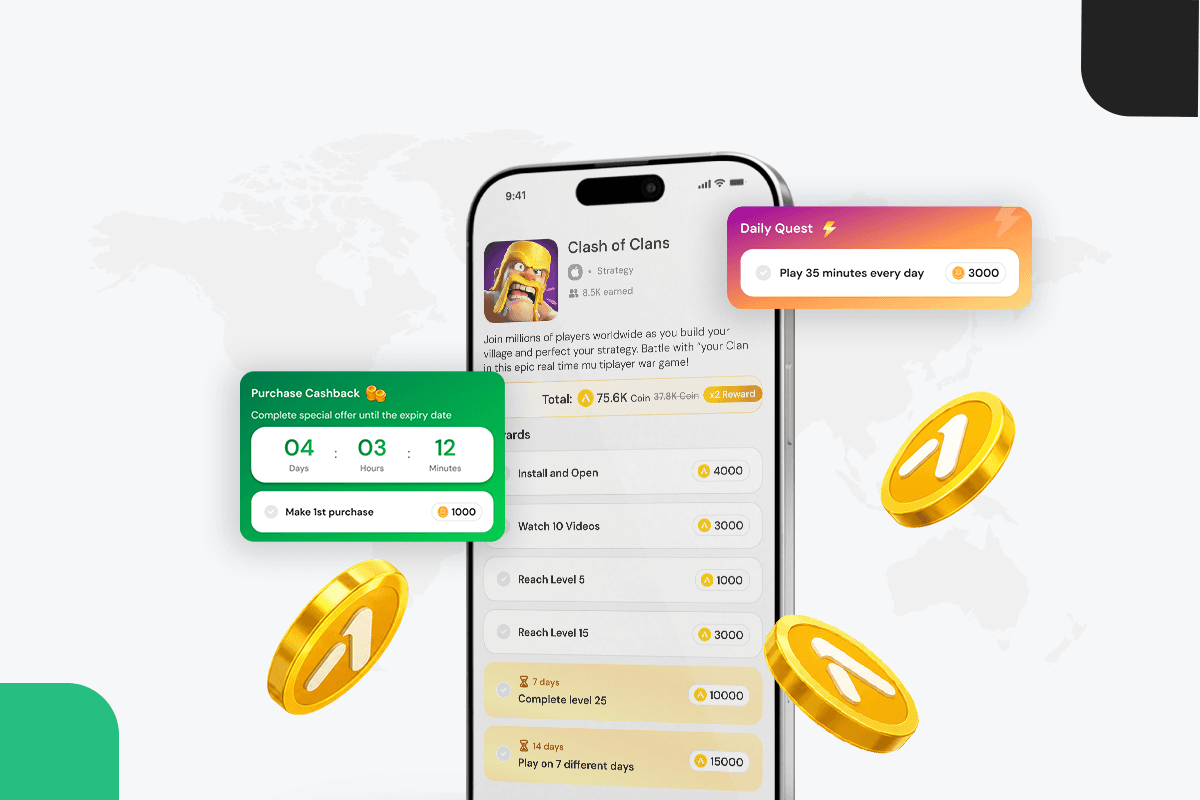
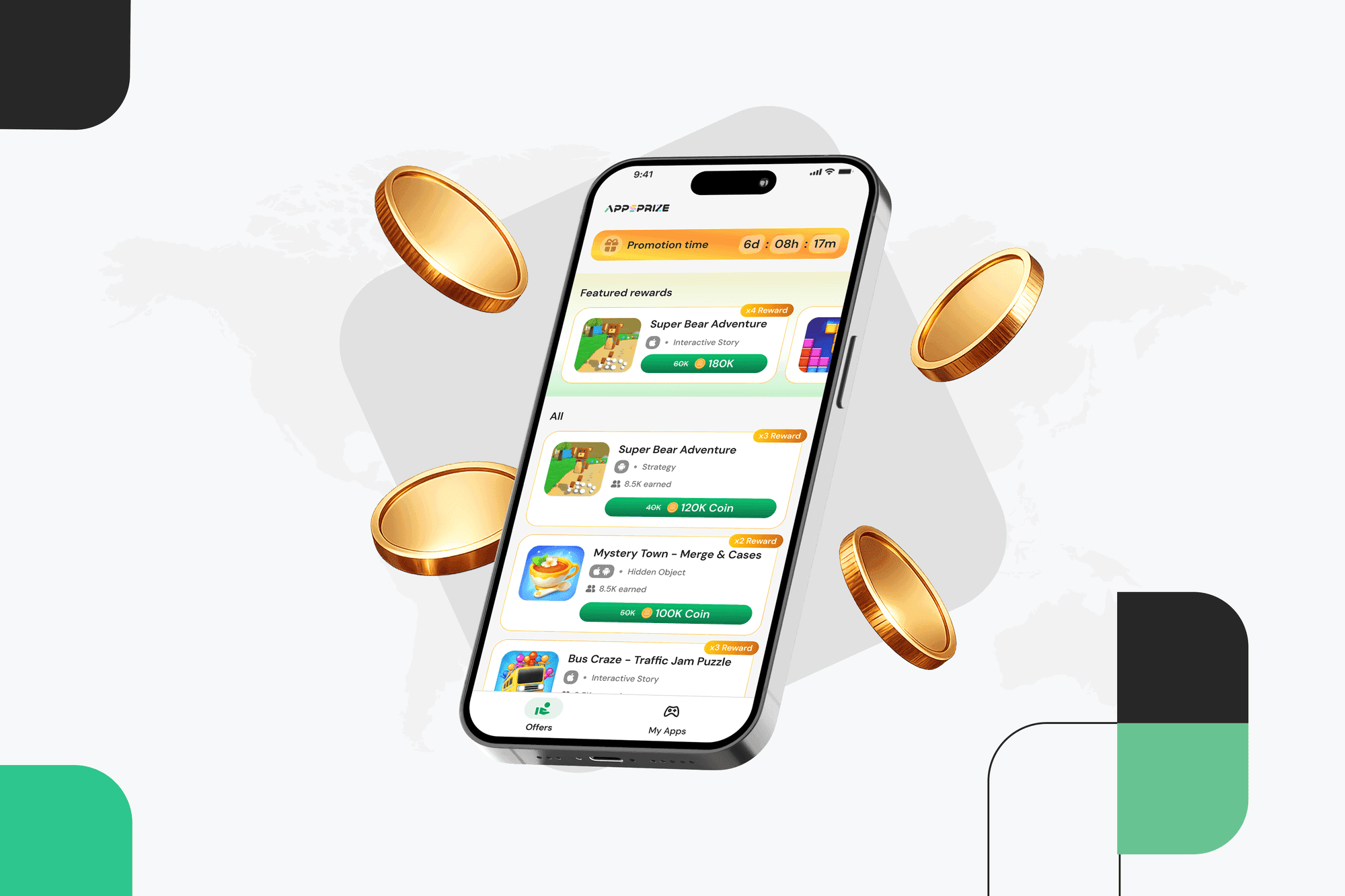
- Your game appears as an offer on other apps’ offerwalls, and users in other games complete actions in yours (reach level X, make a first deposit, complete the tutorial) to earn rewards.
- This is CPE-structured by default, meaning you only pay for users who demonstrate real intent.
- For hybrid-casual, setting the completion threshold at a meaningful engagement milestone (not just an install) produces user cohorts that look dramatically better than standard CPI buys.
Structuring Your Offerwall Campaigns on the UA Side
For UA-side offerwall campaigns, the key decisions are:
- Completion event selection: Set your payout trigger at a point that predicts retention, not just activity. Level 10 completion is better than Level 3 completion. First resource-sink is better than first login.
- Reward calibration: The in-app reward to the completing user needs to feel meaningful relative to your game’s economy, generous enough to motivate completion, not so generous that it distorts your balance or creates an alternate path around your monetization.
- Network selection: Work with partners who have strong reach into the hybrid-casual player graph and can support CPE-based buying structures. Layer campaigns across networks to maximize reach without overlap.
Putting It Together: A Channel Mix Framework
No UA strategy works identically for every hybrid-casual title, but the following framework provides a starting point for allocating budget and attention across channels.
Months 1–2 (Testing & Learning): Spread budget across Meta, Google UAC, and two or three DSPs. Run CPI campaigns with broad targeting and aggressive creative testing. Establish your baseline CPIs, Day 1/Day 7 retention by channel, and early ROAS signals. Don’t optimize hard yet, collect data.
Months 3–4 (Optimization): Cut underperforming channels. Shift to ROAS or event-based bidding on networks where you have sufficient data. Begin CPE campaigns on networks that support them. Launch offerwall campaigns with a thoughtfully chosen completion event. Tighten targeting based on your best early cohorts.
Months 5+ (Scaling): Scale winning channels with confidence. Introduce TikTok if you haven’t. Add influencer/content creator campaigns for organic amplification. Explore API-based offerwall monetization to generate incremental revenue from your engaged player base. Build LiveOps-aligned UA campaigns that coincide with events to capitalize on reengagement.
The Bottom Line
Hybrid-casual is the genre that rewards UA managers who think like product managers. The mechanics of acquisition, CPI, targeting, creative, still matter, but they’re in service of a more complex objective: finding players with the intent and temperament to engage with a deeper product, then building the retention systems that keep them invested long enough for the LTV to materialize.
The UA teams winning in hybrid-casual right now are the ones who’ve moved beyond “cheap installs at scale” and built sophisticated feedback loops between creative data, cohort performance, and monetization outcomes. Rewarded UA and offerwalls, properly integrated, give hybrid-casual titles a channel that is almost uniquely well-suited to their economics, high-intent users acquired on CPE terms, and existing players monetized through engagement rather than extraction.
Get the product depth right, get the UA strategy right, and hybrid-casual is one of the most attractive places to deploy growth budget in mobile gaming today.