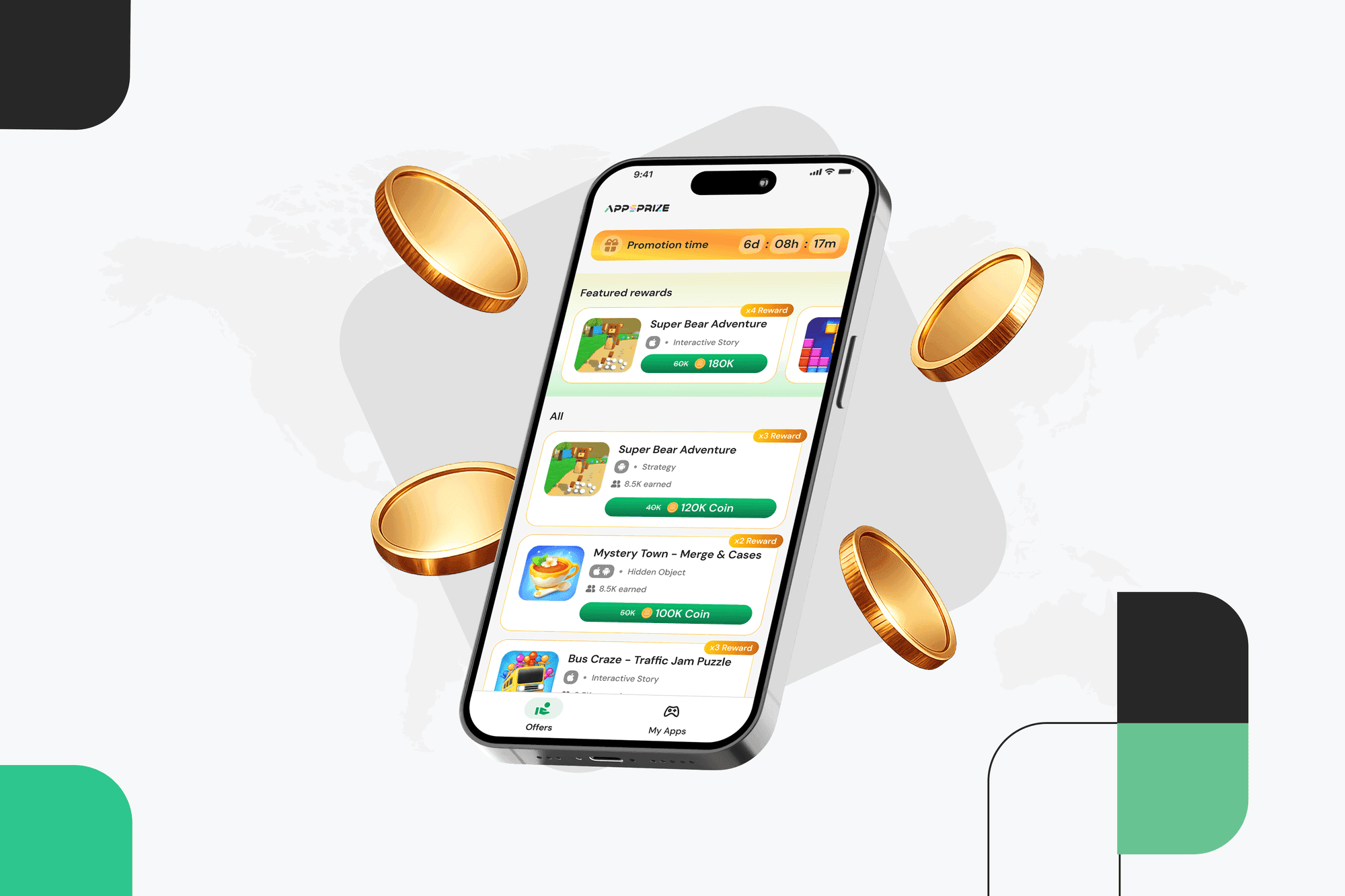
An install can look efficient on a campaign dashboard, but its real value depends on what happens next. Does the player return the following day? Do they progress through the game? Do they watch ads, make in-app purchases, or continue playing long enough to contribute to long-term revenue?
These questions are becoming increasingly important as mobile gaming matures. In its Gaming App Insights Report 2026, Adjust identifies retention and player lifetime value as key priorities for studios facing rising acquisition costs and greater competition for player attention.
This shift creates an opportunity to rethink rewarded user acquisition. Instead of treating rewards primarily as a way to generate installs, marketers can explore how reward structures influence player behavior beyond the initial conversion.
The distinction matters. A campaign that delivers inexpensive installs but little subsequent activity may struggle to meet its ROAS targets. A campaign that attracts players who continue engaging, reach meaningful milestones, and generate revenue has a stronger foundation for sustainable growth.
So, how can rewarded UA contribute to long-term player value, and what should mobile game marketers measure to understand its impact?
Why CPI Alone Doesn't Tell the Whole Story
Cost per install remains a useful acquisition metric. It helps marketers compare campaign efficiency, evaluate markets, and understand how much they pay to bring a new player into a game.
However, CPI doesn't reveal what happens after installation.
Consider two campaigns with the same budget. Campaign A delivers more installs at a lower CPI, but most of those players leave after their first session. Campaign B has a higher CPI, yet its players return more often, progress further, and generate more revenue over time.
Campaign A looks more efficient at first glance. Campaign B may ultimately deliver better business results.
This is why UA teams need to evaluate acquisition costs alongside downstream performance. Retention, progression, monetization, and revenue over time provide a more complete picture of the users a campaign brings in.
The challenge is particularly relevant in mobile gaming, where player behavior and monetization differ considerably across genres. A casual puzzle game, a strategy title, and a social casino game won't necessarily have the same retention patterns, session lengths, or revenue curves.
The 2026 Gaming App Insights Report from Adjust provides benchmarks across gaming subgenres and markets, highlighting why growth teams need to interpret performance in context rather than rely on a single universal benchmark.
For rewarded UA, the practical takeaway is straightforward: don't evaluate a campaign only by how efficiently it generates installs. Evaluate what those installs become.
The Difference Between Rewarded Acquisition and Rewarded Engagement
Not every rewarded acquisition model creates the same incentives.
In a conventional install-focused campaign, a user may receive a reward after installing and opening a promoted game. This can reduce friction at the acquisition stage, but the reward itself doesn't necessarily encourage further activity once the conversion is complete.
The campaign may have achieved its immediate objective even if the player never returns.
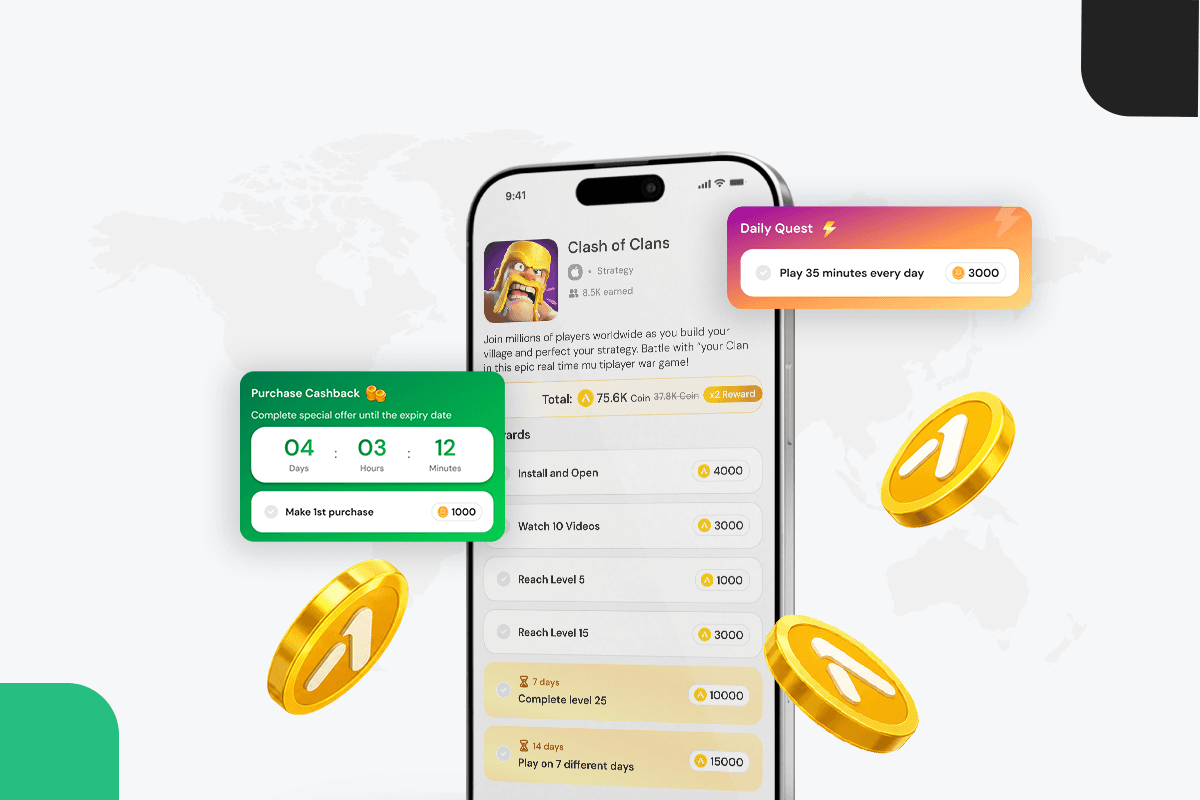
Rewarded engagement introduces a different approach. Instead of making the install the only meaningful conversion, rewards can be connected to continued play, completed tasks, or progress within the game.
For example, a player might earn rewards for:
Spending time in a newly installed game.
Completing an early gameplay milestone.
Returning to play and making further progress.
Reaching additional milestones as they advance.
These mechanics create opportunities to connect the acquisition experience with the gameplay that follows it.
The distinction isn't that every install-focused campaign produces low-quality users, or that every rewarded engagement campaign guarantees retention. Player behavior still depends on the game's appeal, onboarding, difficulty, reward structure, and audience fit.
Rather, the opportunity is to design acquisition around the behaviors that make a player valuable, then measure whether those behaviors actually occur.
This also changes the way marketers should think about rewards. They aren't simply a payment for installing a game. They can be part of a structured experience that encourages users to discover its core mechanics, experience progression, and decide whether they want to continue playing.
How Milestone and Time-Based Rewards Can Encourage Continued Play
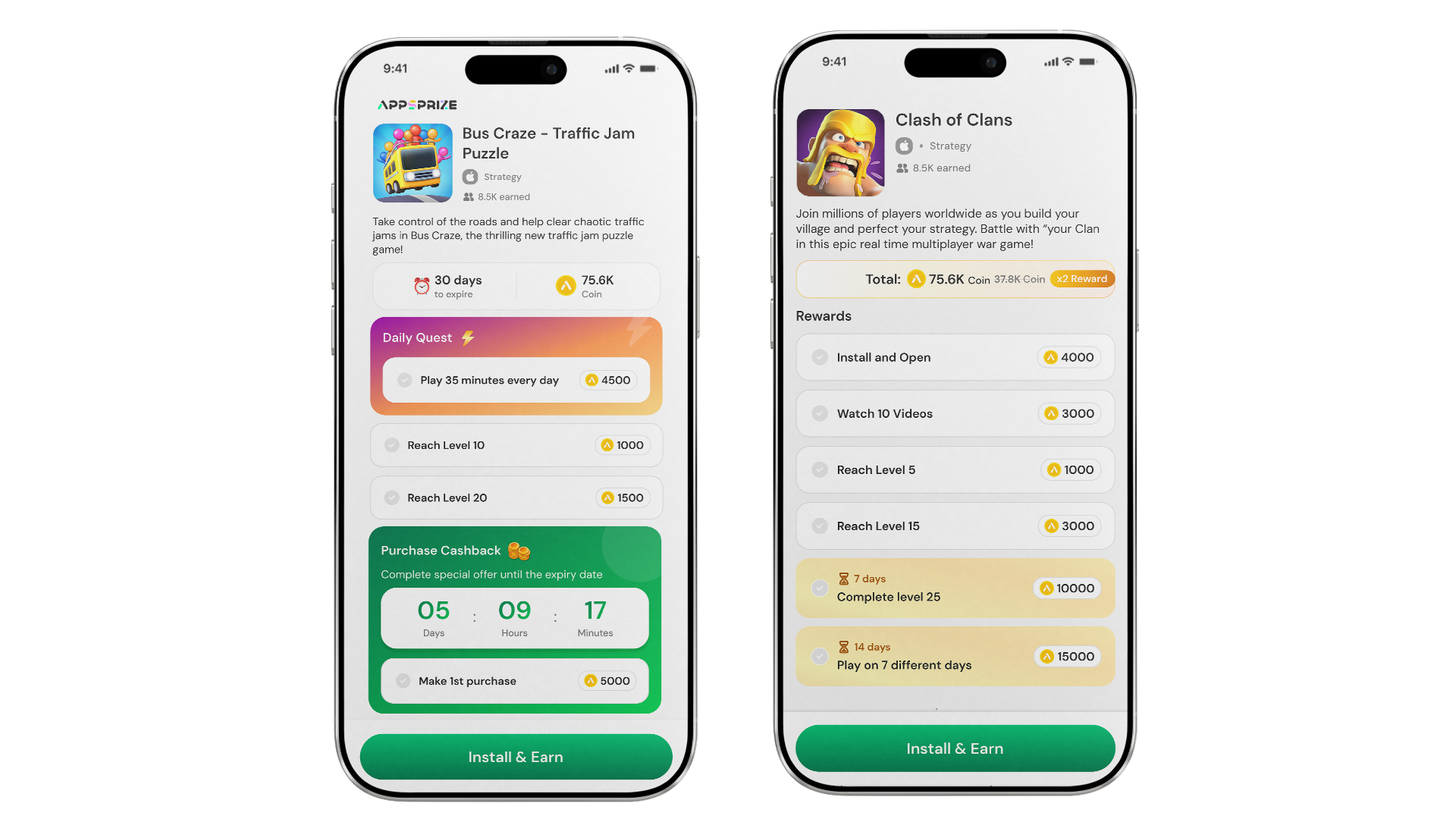
A reward structure needs to do more than persuade someone to start playing. It should give players a clear reason to continue, while allowing the game itself to remain the main attraction.
Two approaches can support this objective: time-based rewards and milestone-based rewards.
Time-based rewards
Time-based rewards connect incentives to the time a player spends in a game. Rather than completing the acquisition journey in a single action, users can earn rewards as they continue playing.
This structure can encourage longer sessions and give players an additional reason to explore a game after installation. However, time spent shouldn't be treated as proof of meaningful engagement on its own. A long session isn't necessarily valuable if the player isn't interacting with the game or returning later.
Marketers should therefore examine time-based rewards alongside session quality, retention, and downstream revenue.
Milestone-based rewards
Milestone-based rewards connect incentives to specific actions or progression points. Depending on the game, these could include completing an introductory stage, reaching a new area, finishing a challenge, or advancing through a series of levels.
Milestones give players clearer objectives and create opportunities to experience more of the game's core loop.
They can also help marketers understand where engagement drops off. If many acquired users reach an initial milestone but few progress beyond it, the data may point to friction in onboarding, difficulty balancing, or the reward structure itself.
Combining both approaches
Time-based and milestone-based rewards can complement each other. Time-based incentives recognize continued play, while milestone rewards encourage progress rather than simply maximizing session duration.
The balance is important. Rewards should feel attainable and relevant, without making the experience overly complicated or encouraging behavior that doesn't align with the game's long-term goals.
This approach is consistent with the broader shift toward sustained engagement identified in Adjust's 2026 gaming research, which highlights reward-driven engagement and live operations among the areas shaping mobile game growth.
For studios, the objective isn't to keep players active at any cost. It's to give the right users more opportunities to experience the game and discover reasons to return.
Retention Is the First Test of Long-Term Value
Retention helps determine whether an acquisition campaign is bringing in users who continue engaging with a game after installation.
Day 1 retention is an important early signal, but it shouldn't be the final measure of success. A campaign may bring players back the following day without generating the sustained engagement or revenue needed to meet longer-term targets.
That makes it useful to assess retention across several timeframes:
D1 retention: Are players returning after their initial experience?
D7 retention: Are they still finding reasons to play after the first week?
D30 retention: Does engagement continue over a longer period?
These metrics should be interpreted according to genre, audience, and business model. A D30 result that looks strong for one type of game may not be directly comparable with the same result in another.
It's also important to look beyond retention rates alone. Session frequency, time spent playing, level completion, and progression can help explain why users return or disengage.
Research from Google AdMob and Deloitte reinforces the importance of the experience players have while engaging with a game. Their 2026 report on mobile gaming ad quality draws on a study of 7,000 gamers and identifies a relationship between high-quality ad experiences and continued play. The findings also warn that disruptive advertising experiences can increase churn.
For rewarded UA, this reinforces a key principle: incentives should complement the player experience, not undermine it. If the reward is the only compelling reason to open a game, sustained engagement may be difficult to achieve once that incentive loses its appeal.
Connect Retention to Monetization and Long-Term ROAS
Retention tells marketers whether players are coming back. Monetization data helps establish whether that engagement is translating into business value.
The relevant signals will vary by game.
For titles monetized primarily through in-app advertising (IAA), useful metrics may include ad impressions, rewarded video engagement, and advertising revenue per user. For games driven by in-app purchases (IAP), marketers may focus on payer conversion, purchase frequency, and revenue per paying user. Hybrid-monetized games need to account for both revenue streams.
The key is to connect acquisition data with the monetization events that matter to the studio.
For example, a rewarded campaign might generate users with a higher CPI than another source. If those users retain better and generate more revenue over time, the higher initial cost may be justified.
On the other hand, stronger retention doesn't automatically mean better ROAS. Players may return regularly without generating enough revenue to cover acquisition costs. Both engagement and financial performance need to be considered.
A useful measurement framework combines several layers:
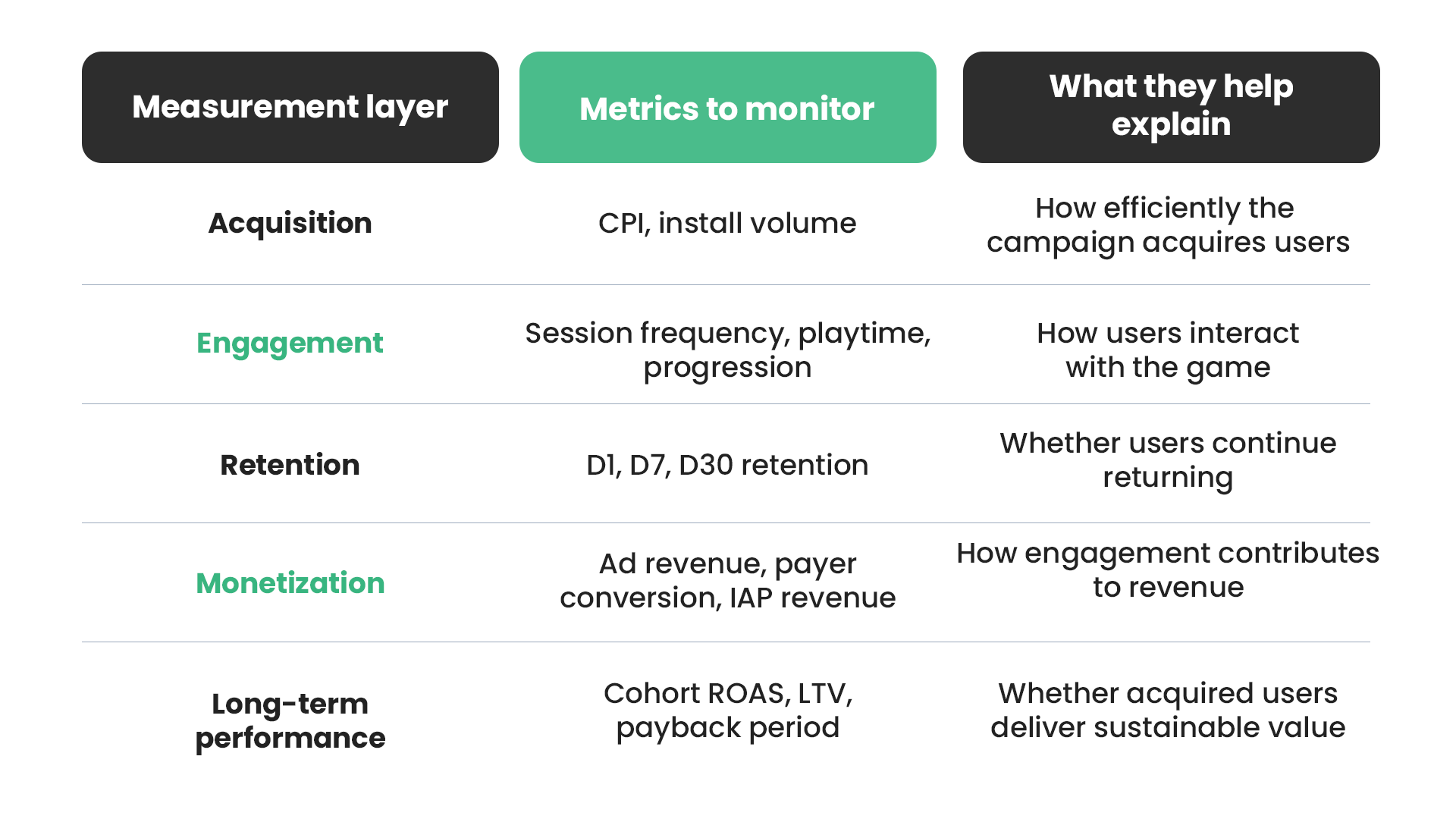
Cohort analysis is particularly useful here. By comparing users acquired during the same period or through the same campaign, marketers can track how retention and revenue develop over time.
They can also compare rewarded UA cohorts with other acquisition sources, provided the analysis accounts for differences in targeting, geography, game version, and campaign objectives.
The goal is to understand not just which campaign generates the most activity, but which campaign generates the right activity at an acceptable cost.
How to Test Whether Rewarded UA Is Delivering Better Users
Rewarded UA shouldn't be judged on assumptions about player quality. Its impact needs to be tested against the studio's actual goals.
A practical testing process can start with four steps.
First, define the outcome before launching. Decide what success means for the campaign. Is the priority improving D7 retention, increasing progression, reaching a target D30 ROAS, or acquiring users who are more likely to make an in-app purchase?
Second, establish a comparable baseline. Use existing campaign data to understand how users acquired through other channels perform. Keep the comparison as consistent as possible across geography, platform, audience, and measurement window.
Third, track the full user journey. Monitor the initial install, early sessions, milestone completion, retention, and revenue. This helps reveal where users disengage and whether the campaign is meeting its intended objective.
Fourth, allow enough time to evaluate the result. Early retention can provide useful signals, but long-term ROAS takes longer to mature. Use interim indicators to optimize carefully, then evaluate revenue against the appropriate cohort window.
Where possible, use holdout groups or other incrementality methods to determine whether a campaign is generating additional value rather than simply capturing users who would have installed or played anyway.
It's also worth testing the reward structure itself. Compare time-based incentives with milestone-based rewards, or test different progression thresholds to understand which mechanics produce stronger outcomes.
The aim is not to maximize every metric simultaneously. It's to identify the balance between acquisition cost, engagement, retention, and revenue that works for the game.
Bringing Rewarded UA Into a Long-Term Growth Strategy
Rewarded UA is most useful when it connects with the wider growth strategy rather than operating as an isolated acquisition tactic.
That means considering the entire journey, from the ad experience and initial install to onboarding, continued play, and monetization.
It also means recognizing that rewards alone cannot compensate for a weak game experience. A compelling core loop, appropriate difficulty, clear progression, and well-designed onboarding remain essential to long-term retention.
For studios looking to explore this approach, AppSamurai's Rewarded Playtime solution for mobile games combines time-based and event-based rewards, giving players incentives for the time they spend playing and the milestones they reach. The solution also uses first-party data and machine learning to match users with game offers they are more likely to engage with.
AppSamurai reports a 45% increase in D1 retention and 119% long-term ROAS for Rewarded Playtime on its product page. These are AppSamurai-reported results, not universal outcomes or guarantees; actual performance depends on the game, campaign setup, audience, and measurement methodology.
The broader principle applies regardless of the acquisition channel: sustainable growth comes from understanding what happens after the install and optimizing toward the outcomes that matter to the business.
Final Thoughts
The value of rewarded UA shouldn't end when a player installs a game. By connecting rewards to continued play and meaningful progression, studios can explore ways to encourage engagement beyond the initial conversion.
But the real test lies in the data. Retention, progression, monetization, and cohort ROAS need to be evaluated together to understand whether a campaign is delivering users who contribute to long-term growth.
For mobile game marketers, that means moving beyond install volume as the primary measure of acquisition success. The objective is to acquire players who enjoy the game, have reasons to return, and create value over time.
That's where rewarded UA can become more than an acquisition tactic: a measurable part of a broader player growth strategy.