

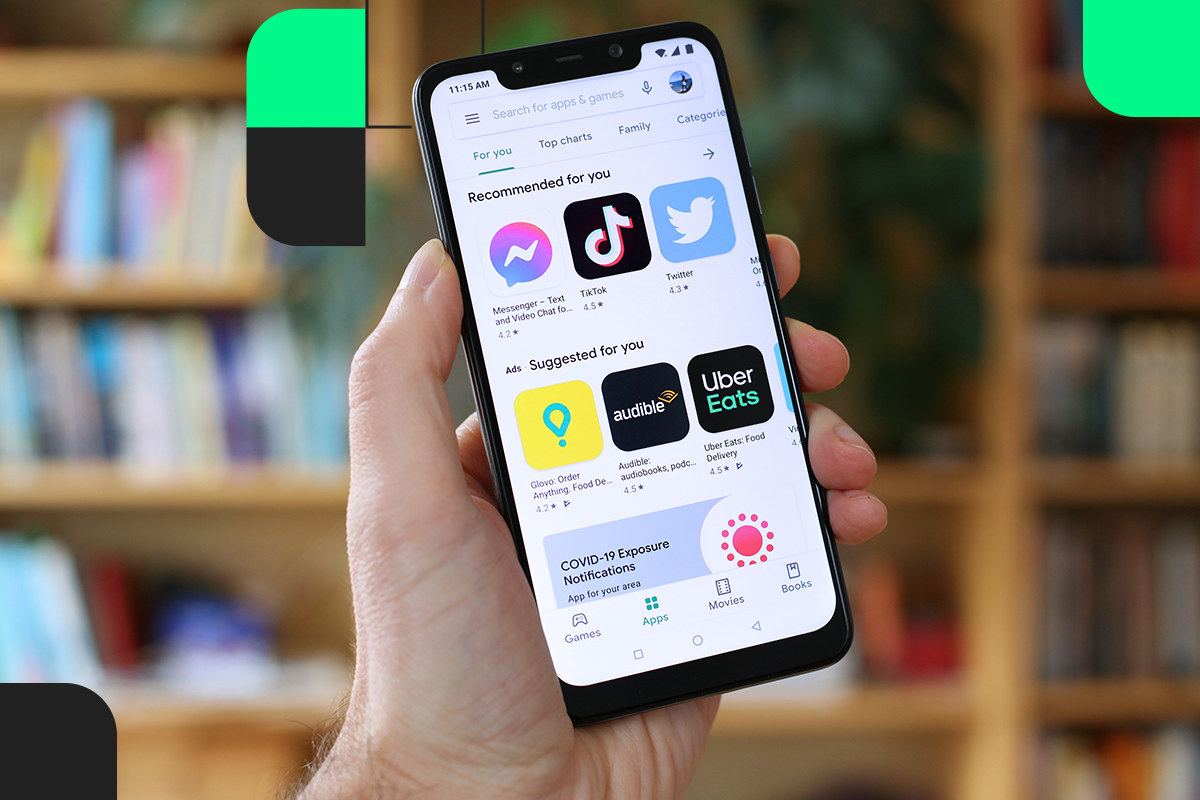
The Google Play Store now hosts an unprecedented 3.353 million mobile apps according to the latest Statista research. In this intensely competitive ecosystem, visibility has become the primary challenge for developers. The critical question facing every app publisher is: “How can I ensure my app cuts through the noise and reaches its intended audience?” The answer lies in implementing a sophisticated Google Play Store SEO strategy. This comprehensive guide examines why ranking matters more than ever in 2025 and provides actionable, data-driven optimization techniques to significantly boost your app’s visibility and conversion rates.
The Measurable Impact of Google Play Store Rankings
In today’s saturated app marketplace, your ranking position directly determines your success. Research from AppAnnie reveals that 70% of app discoveries occur through store searches, with 63% of users never scrolling beyond the top 5 results. Each position drop in rankings correlates to approximately a 15% decrease in conversion rate, according to SplitMetrics’ 2024 ASO benchmark study.
App Store Optimization (ASO) is the systematic process of improving your app’s visibility and conversion rates through strategic metadata refinement, user experience enhancement, and performance optimization. Unlike broader Search Engine Optimization (SEO), ASO focuses specifically on mobile app store algorithms and user behavior patterns. Effective ASO implementation has been shown to reduce user acquisition costs by up to 67% while increasing organic install quality by 36%, according to data from Sensor Tower’s 2024 industry benchmark report.

Decoding Google Play Store’s Ranking Algorithm in 2025
Core Algorithm Components and Recent Updates
Google Play’s ranking algorithm has evolved significantly in 2024-2025, with the latest updates emphasizing user engagement depth over surface-level metrics. The algorithm now evaluates apps through a complex weighted system considering multiple interconnected factors: keyword relevance (30% impact), user engagement metrics (35% impact), technical performance (15% impact), and social proof signals (20% impact), according to reverse-engineering studies by MobileDevHQ.
The February 2025 algorithm update now places significantly greater emphasis on retention metrics beyond day 30, with apps showing strong 60-day retention receiving substantial ranking boosts. Additionally, the update introduced semantic search capabilities that allow Google Play to understand user intent beyond exact keyword matches—similar to how Google’s web search evolved with BERT and subsequent natural language processing models.
Keyword Strategy: Beyond Basic Optimization
Strategic keyword implementation remains the foundation of visibility, but the approach has evolved beyond simple placement. Effective keyword strategy in 2025 requires understanding the semantic relationships between terms and how they align with user search intent. A comprehensive keyword strategy must include high-traffic head terms balanced with conversion-focused long-tail phrases.
AppTweak’s 2024 ASO study found that apps implementing semantic keyword clusters outperformed those using isolated keywords by 43% in visibility scores. For instance, rather than simply targeting “fitness tracker,” successful fitness apps now create semantic clusters around “weight loss journey tracking,” “strength training progress app,” and “nutrition monitoring for athletes”—addressing specific user needs while maintaining thematic relevance.

Technical Performance Metrics: The Critical Ranking Factors
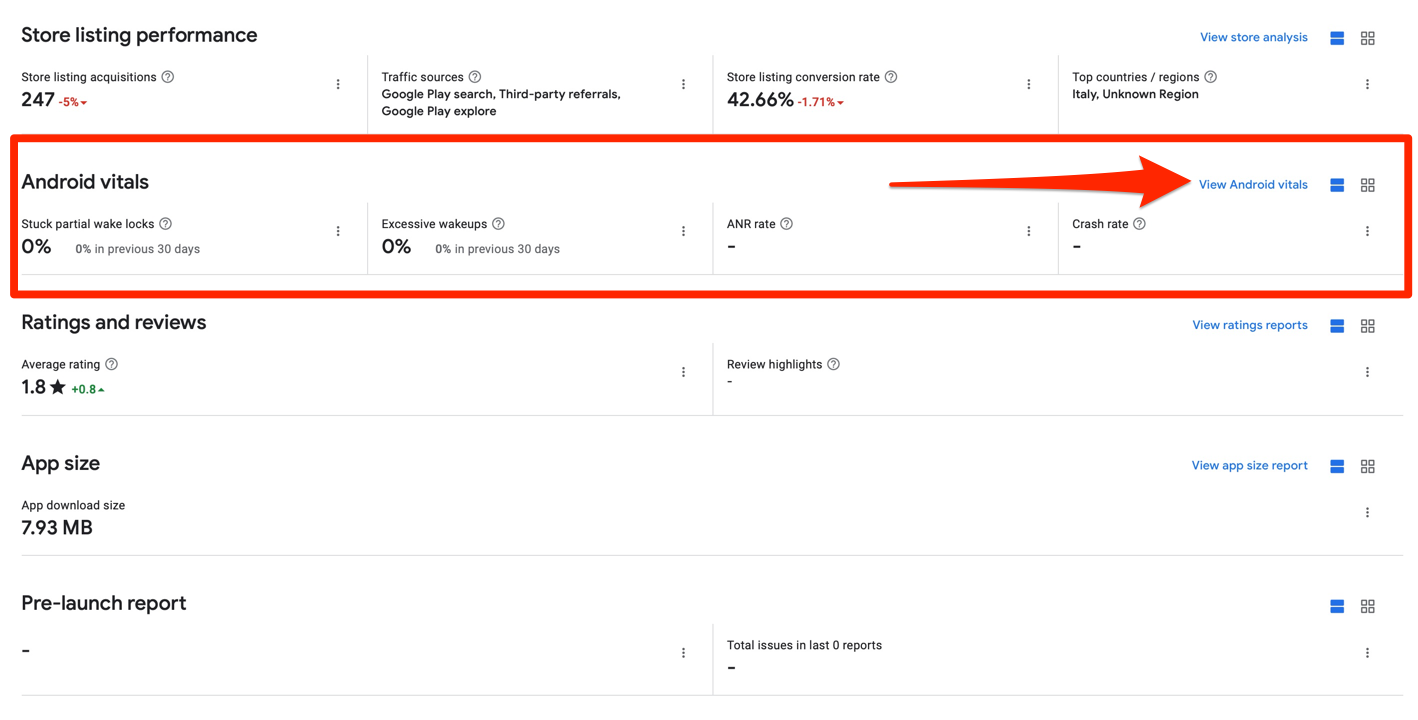
Google’s emphasis on user experience has elevated technical performance metrics to critical ranking factors. Apps with crash-free rates below 99.5% experience an average ranking penalty of 7 positions for competitive keywords, according to Google’s own developer documentation. The algorithm now evaluates:
- Crash rate frequency and severity
- Application Not Responding (ANR) incidents
- Battery consumption patterns
- Initial load time (with penalties for apps exceeding 2.5 seconds)
- Frame rate consistency during core user journeys
- App size efficiency relative to feature set
SplitMetrics found that improving technical performance metrics correlates with a 23% average improvement in conversion rates, creating a virtuous cycle that further enhances rankings.
Ratings and Reviews: Quantifying Their Ranking Impact
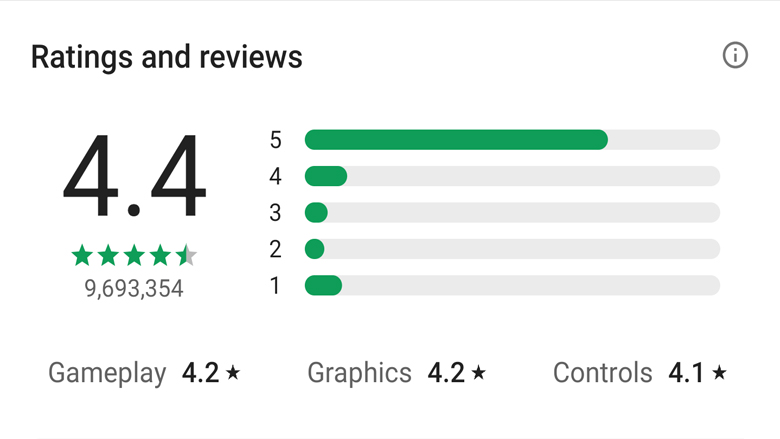
User ratings and reviews function as both conversion elements and ranking signals. Apptentive’s 2024 benchmark report quantified that each 0.1-star improvement in average rating correlates with approximately a
4% increase in conversion rates. More specifically:
- Apps with ratings below 3.0 stars receive significant algorithmic penalties, appearing on average 27% lower in search results
- Improving from 3.5 to 4.5 stars increases conversion rates by up to 89%
- Response rates to reviews directly impact ranking, with apps responding to over 40% of reviews ranking 23% higher on average
- The sentiment analysis algorithm identifies keywords within reviews, with positive mentions of key features providing ranking boosts for related search terms
Google’s algorithm now evaluates not just the quantity of reviews but their recency, sentiment distribution, keyword relevance, and whether developer responses effectively address user concerns.
Comprehensive App Store Optimization Strategies for 2025
Keyword Research Methodology for Different App Categories
Effective keyword research requires a systematic, category-specific approach. The competitive landscape varies dramatically across app categories—gaming apps face different keyword challenges than productivity tools or e-commerce applications. Implement a structured research methodology:
- Competitor Analysis: Analyze the top 10 competing apps in your specific category and subcategory using tools like data.ai or Mobile Action to identify their visibility patterns.
- Search Volume Assessment: Prioritize keywords based on relevance-adjusted search volume using Sensor Tower‘s keyword intelligence tools to identify high-opportunity terms.
- Difficulty Evaluation: Calculate the difficulty score for each potential keyword by analyzing the average rating, review count, and install numbers of currently ranking apps.
- Conversion Potential Analysis: Evaluate which keywords drive not just visibility but quality installs by connecting keyword data with conversion analytics from Google Play Console.
For smaller developers with limited resources, focus initially on long-tail keyword opportunities with difficulty scores below 40/100, gradually expanding to more competitive terms as your app gains traction and performance data.
The keyword selection process must balance visibility potential with conversion likelihood. The most effective approach uses a tiered strategy:
- Primary keywords: 2-3 high-relevance terms with moderate competition (difficulty score 50-70) for your title and short description
- Secondary keywords: 5-7 supporting terms with strong conversion intent for the first paragraph of your long description
- Tertiary keywords: 10-15 long-tail variations and related terms distributed naturally throughout your extended description
For example, a personal finance app might target “budget tracker” (primary), “expense management app” (secondary), and “student loan payment planning tool” (tertiary) based on its specific feature set and target audience.
Implement a systematic keyword monitoring cadence with:
- Weekly position tracking for primary and secondary keywords
- Bi-weekly conversion rate analysis by keyword source
- Monthly competitive landscape reassessment
- Quarterly major metadata optimization based on performance data
This structured approach ensures you can identify opportunities and challenges before they significantly impact your visibility.
Metadata Optimization: Maximizing Limited Character Space
Your app’s metadata elements—title, short description, and long description—must be strategically crafted to satisfy both algorithmic requirements and user conversion triggers. Google Play’s 30-character title limitation requires exceptional precision in communicating both your app’s purpose and primary keywords.
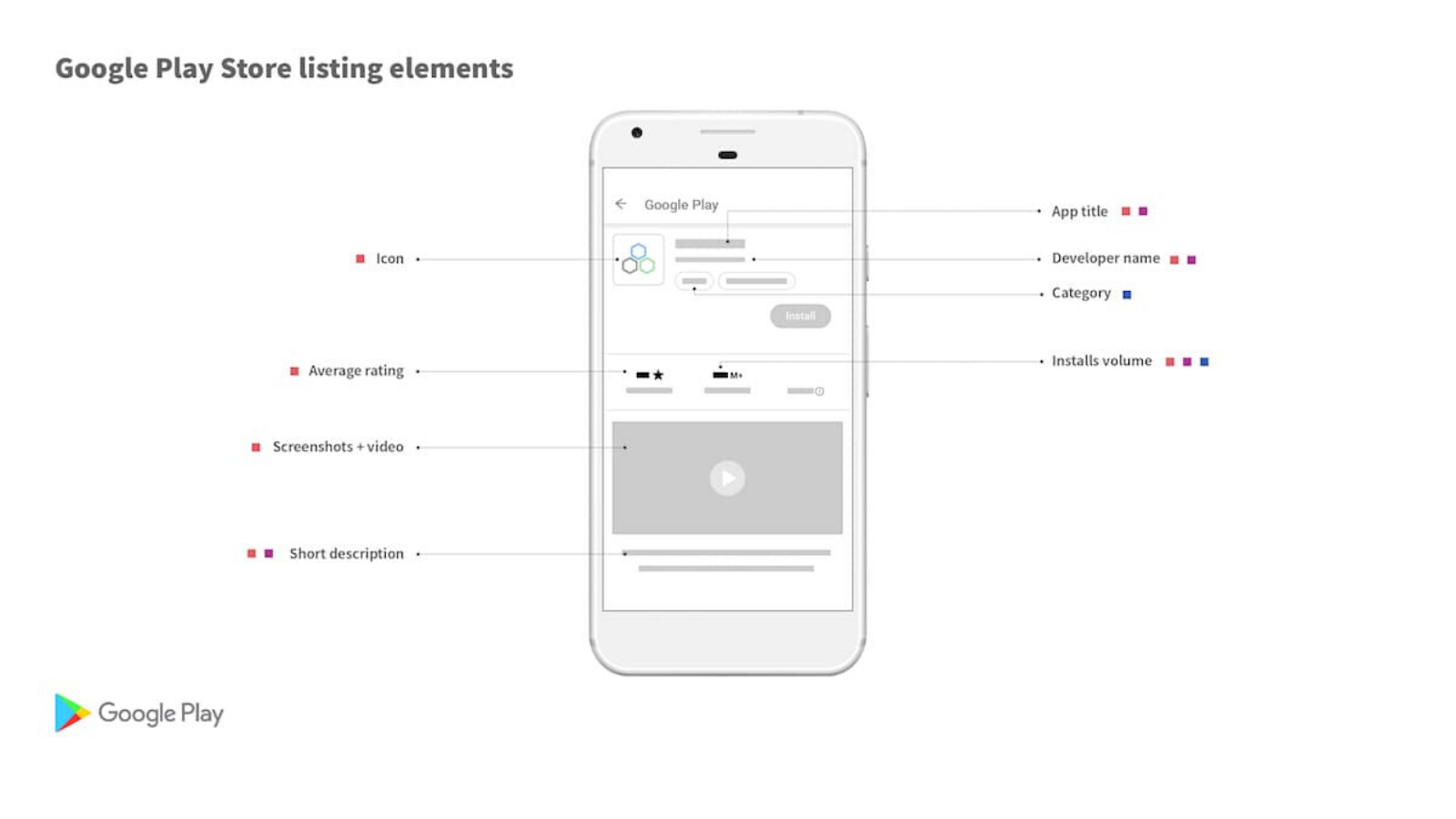
A/B testing data from StoreMaven shows that titles following the pattern [Brand Name: Functional Keyword + Benefit] outperform other structures by 26% in conversion rates. For your 80-character short description, prioritize your unique value proposition and secondary keywords, focusing on addressing the primary user need your app solves.
For your full 4,000-character description, implement a strategic structure:
- First paragraph: Core value proposition and primary benefits (includes primary and secondary keywords)
- Feature blocks: Scannable bullet points highlighting key features with benefit-oriented language
- Social proof section: Brief mentions of awards, user testimonials, or impressive statistics
- Use case scenarios: Descriptions of how different user segments benefit from the app
- Technical requirements and compatibility: Essential information for user decision-making
StoreMaven’s conversion analysis found that descriptions using this structured approach convert 31% better than unstructured alternatives. For smaller developers, focus on communicating your unique advantage over larger competitors—whether it’s specialized functionality, superior user experience, or focus on an underserved niche.
User Engagement Metrics: The New Ranking Currency
Retention Optimization Strategies That Impact Rankings
With Google’s algorithm now heavily weighting retention metrics, systematic retention optimization directly impacts visibility. Amplitude’s user behavior analysis identified that apps with retention rates above 30% on day 30 typically rank 20-30% higher for competitive keywords than those with below-average retention.
Implement these evidence-based retention strategies:
- Optimized onboarding: Reduce time-to-value by 40-60% by eliminating friction points in initial user experience
- Personalized engagement: Implement behavior-based user segmentation with tailored content paths (improving retention by 23% on average)
- Strategic push notifications: Deploy contextually relevant, personalized notifications that achieve 3-5x higher engagement than generic messages
- Feature discovery: Use progressive disclosure to introduce advanced features as users master basics (increasing feature adoption by 37%)
- Regular content refreshes: Maintain a consistent cadence of updates to give users reasons to return
For resource-constrained developers, prioritize onboarding optimization and implementing basic personalization rules, which offer the highest retention impact relative to development cost.
Strategic Review Management System
Implementing a systematic approach to review acquisition and management can dramatically improve both ratings and rankings. According to Apptentive’s research, implementing a strategic review prompt system increases review volume by an average of 80% while improving average rating by 0.4 stars.
Design your review management system around these proven principles:
- Intelligent timing: Trigger review requests after positive user experiences (completing a level, receiving a benefit, or using a core feature successfully)
- Sentiment filtering: Implement a pre-review sentiment check to direct negative feedback to direct support channels while guiding positive sentiment to store reviews
- Response protocols: Develop templatized but personalizable responses for common review types with a guaranteed response time under 24 hours
- Actionable analytics: Categorize reviews by topic, sentiment, and feature mentions to identify optimization priorities
- Closed feedback loop: Communicate back to users when their feedback leads to improvements
Independent developers can implement simplified versions of this system using tools like Instabug or Firebase Remote Config to target review prompts based on user behavior patterns.
Global Market Expansion: Localization as a Ranking Multiplier
Comprehensive app localization represents one of the highest-ROI strategies for expanding reach and improving regional rankings. DevToaster’s 2024 international ASO study documented that properly localized apps experience 128% higher download rates and 26% stronger retention compared to non-localized competitors in the same regional markets.
While English-language markets represent only 27% of global app revenue opportunity, they account for 76% of competition in most categories. Expanding into strategic regional markets with lower competition indices can dramatically improve ranking potential while reducing user acquisition costs.
Click here to read AppSamurai’s comprehensive Mobile Game Localization guide!
Strategic Localization Implementation Framework
Effective localization requires a methodical, prioritized approach:
- Market opportunity assessment: Analyze regional download volumes, revenue potential, and competition levels using tools like App Annie or Sensor Tower’s market intelligence
- Localization depth decision: Determine appropriate localization levels for each market:
- Basic: Metadata and store listing only (30-40% of full localization benefit)
- Standard: User interface and core content (70-80% of benefit)
- Comprehensive: Complete experience including culturalization (100% of benefit)
- Cultural adaptation: Adjust visuals, examples, and feature emphasis based on cultural preferences (e.g., emphasizing group achievements in collectivist cultures versus personal achievements in individualist cultures)
- Regional keyword optimization: Conduct market-specific keyword research rather than direct translation of primary market keywords
- Payment and pricing localization: Implement local payment methods and adjust pricing strategies to regional purchasing power
For developers with limited resources, start with metadata localization for 3-5 high-potential markets with low competition indices relative to download volume, then progressively expand localization depth based on performance data.
Building a Strategic Off-Page SEO Program
While on-page optimization focuses on your store listing elements, off-page factors—particularly backlinks and web mentions—significantly impact Google Play visibility. AppTweak’s correlation analysis found that apps with diverse, high-quality backlink profiles rank 15-25% higher than competitors with similar on-page optimization but weaker off-page signals.
Develop an effective off-page SEO strategy:
- Digital PR campaigns: Create newsworthy content or features that generate authentic media coverage and editorial links
- Industry resource development: Publish valuable original research, tools, or resources that naturally attract backlinks
- Strategic partnerships: Develop co-marketing initiatives with complementary (non-competing) services or platforms
- Community engagement: Establish authentic presence in relevant communities, offering genuine value before subtle promotion
- Influencer collaboration: Partner with micro-influencers (10K-50K followers) in your specific niche for authentic promotion
The quality-over-quantity principle is paramount; a single editorial mention from a respected industry publication generates substantially more ranking benefit than dozens of generic directory listings.
Data-Driven Optimization Cycles
Implementing structured, data-driven iteration cycles is essential for maintaining and improving rankings in Google Play’s constantly evolving ecosystem. Research from Split Metrics shows that apps implementing monthly optimization cycles experience 32% higher year-over-year growth compared to those making quarterly or less frequent updates.
Establish a systematic optimization framework:
- Weekly performance monitoring: Track core KPIs including keyword positions, conversion rates, and engagement metrics
- Bi-weekly competitive analysis: Monitor competitor metadata changes, feature updates, and ranking movements
- Monthly store listing refreshes: Update screenshots, videos, or feature highlights based on performance data
- Quarterly metadata optimization: Perform comprehensive keyword reassessment and metadata refinement
For smaller teams, focus on monthly combined assessments with prioritized actions based on potential impact versus implementation effort.
Advanced Performance Monitoring Tools and Techniques
Leverage specialized tools to gain actionable insights across multiple performance dimensions:
- Google Play Console: Core acquisition funnel analytics and technical performance reporting
- Firebase Analytics: User behavior patterns and custom conversion events
- AppTweak or Mobile Action: Competitive intelligence and keyword opportunity analysis
- SplitMetrics or StoreMaven: A/B testing platform for store listing optimization
- APM tools: Technical performance monitoring for crash detection and optimization
Independent developers should prioritize mastering Google Play Console’s free analytics and Firebase implementation before investing in paid third-party tools.
ASO for Different App Business Models
Optimization strategies must be tailored to your specific app business model:
- Freemium Apps: Focus on high-volume keywords with strong install intent, emphasize free functionality in metadata, and highlight premium features in screenshots
- Subscription Apps: Target higher-intent, solution-focused keywords, emphasize value proposition in short description, and showcase subscription benefits visually
- Paid Apps: Focus on high-conversion, specific-intent keywords with lower competition, emphasize unique capabilities versus free alternatives, and use preview videos to justify price point
- Ad-Supported Apps: Target high-volume discovery keywords, focus on engagement features in description, and highlight content quality in visuals
SplitMetrics found that aligning ASO strategy with business model results in 27% higher ROAS (Return on Ad Spend) compared to generic approaches.
Emerging Trends Reshaping Google Play Store SEO
Stay ahead of these emerging trends reshaping the Google Play optimization landscape:
- AI-powered personalization: Google’s algorithm increasingly personalizes search results based on individual user behavior patterns and preferences
- In-app events promotion: Google now gives visibility boosts to apps that regularly update their store listing with in-app events and seasonal content
- Feature-level indexing: The algorithm is becoming more sophisticated at understanding and indexing specific features within apps rather than just the app as a whole
- User journey signals: Rankings now incorporate deeper engagement signals measuring meaningful user journeys rather than just session time
- Privacy-focused competition: With increasing privacy regulations, apps demonstrating transparent data practices receive subtle ranking advantages
Early adopters aligning their ASO strategies with these algorithmic shifts typically gain significant advantages during transition periods.
Measuring ASO ROI: Beyond Surface Metrics
Implement comprehensive ASO measurement focusing beyond surface metrics like rankings and raw download counts:
- Blended CAC (Customer Acquisition Cost): Calculate how ASO efforts reduce overall user acquisition costs across channels
- Keyword Quality Score: Develop a proprietary scoring system connecting keyword rankings to user quality signals
- Lifetime Value by Acquisition Source: Compare LTV of users from optimized organic searches versus other channels
- ASO ROI Formula: (Incremental Revenue from ASO – ASO Investment) / ASO Investment
This comprehensive measurement approach enables data-driven decisions about where to focus future ASO investments for maximum impact.
Conclusion: Sustainable Competitive Advantage Through ASO
In the increasingly sophisticated Google Play ecosystem, mastering ASO has evolved from an optional advantage to a fundamental requirement for sustainable success. The strategies outlined in this comprehensive guide represent proven approaches for systematically improving visibility, attracting targeted organic traffic, and significantly enhancing both download volume and user quality.
The most successful developers approach ASO not as a one-time project but as an ongoing, data-driven process of continuous optimization. By implementing these evidence-based techniques with consistency and precision, your app can steadily climb the rankings to achieve its full potential in the global marketplace. The difference between visibility and obscurity—between success and failure—often comes down to the systematic application of these ASO principles.