

For years, Telecom operators (Telcos) have relied on their mobile apps as functional utilities. These apps are where users go to check their remaining gigabytes, pay a monthly bill, or troubleshoot a connection. But here is the problem: utility does not equal loyalty. If a subscriber only opens your app once a month to pay a bill, you have exactly one opportunity to engage them. If that interaction is purely transactional, there is no emotional “hook” keeping them from switching to a competitor for a $5 discount.
To survive in 2026, Telcos must transform their apps from utility tools into lifestyle destinations. The secret to this transformation is gamified engagement through a loyalty SDK.
The Retention Crisis in Telecommunications
The cost of acquiring a new subscriber in the telecom sector is notoriously high, often involving heavy subsidies for hardware or aggressive marketing campaigns. Meanwhile, churn rates remain a persistent headache. In a world of “contract-free” eSIMs and instant porting, the friction to leave a provider is lower than ever.
Traditional loyalty programs, offering small discounts on hardware or partner coupons, often fail because they lack frequency. A loyalty program is only effective if the user remembers it exists. This is where the concept of “Recency, Frequency, and Monetary value” (RFM) comes into play. By integrating a “Play & Earn” ecosystem, you solve the frequency problem instantly. You give the user a reason to open your app every single day, not just on billing day.
Why “Play & Earn” is the Perfect Fit for Telcos
Reducing Churn through “Sunk Cost”
When a user spends months earning points and leveling up their status within your “Play & Earn” hub, they develop a “sunk cost” relationship with your brand. Switching to another carrier doesn’t just mean changing a SIM card; it means losing their accumulated points, their progress, and their path to free data. This psychological “stickiness” is the strongest defense against churn.
Boosting ARPU
While the rewards might be free to the Telco, the engagement isn’t. Users who spend more time in your app are more likely to see your other offers—fiber upgrades, family plans, or insurance products. Furthermore, gaming is a high-data-consumption activity. If you encourage users to play, you naturally increase data consumption, which can lead to users opting for higher-tier data plans.
Data-Driven Insights
The AppsPrize SDK provides a treasure trove of first-party data. We understand which types of games your subscribers enjoy, so that you can build more accurate customer personas. Is your user a “hardcore gamer” or a “casual puzzler”? Knowing this allows you to target your primary telecom offers with surgical precision.
How AppsPrize Works: A Step-by-Step Guide for Telecom
Integrating a sophisticated loyalty engine doesn’t have to be a multi-year engineering project. AppsPrize is designed to plug directly into your existing infrastructure to provide immediate value. Here is how the process works:
1. Seamless Integration
The AppsPrize SDK is engineered to be lightweight and “developer-friendly.” We understand that telecom apps are complex, often housing sensitive billing data and personal information. Our SDK is built to integrate into your existing app without bloating the file size or compromising security.
It allows you to embed a fully branded “Play & Earn” hub directly into your app’s dashboard. This ensures a seamless experience for users—they never feel like they are leaving your brand’s ecosystem. There’s no need for complicated back-end development or disrupting the core user experience; it’s a “plug-and-play” solution for long-term engagement.
2. Premium Game Selection
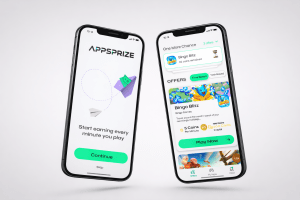
Once the SDK is live, your subscribers gain access to a curated “Discovery Hub.” Here, they can choose from a wide variety of popular mobile games, including:
- Casual & Puzzle Games: Perfect for the “commuter” demographic.
- Action & Strategy: For younger, high-data-usage power users.
- Trivia & Board Games: To appeal to a broad, family-oriented audience.
These games aren’t just random titles; they are carefully selected based on the preferences of your target audience. By offering high-quality gaming content, your telecom app becomes a source of entertainment, significantly increasing the DAU and the average time spent in-app
3. Earn Rewards for Playtime: The Loyalty Loop
This is the core of the “Play & Earn” philosophy. As users play the games discovered through your app, they accumulate loyalty points based on the time spent playing. The mechanics are simple: The longer they play, the more points they earn. These points automatically sync with your existing telecom loyalty program. In the telecom context, this opens up a world of redemption possibilities that users actually care about:
- Data Top-ups: “Play for an hour, get 1GB of bonus data.”
- Bill Credits: Allow users to “game away” a portion of their monthly bill.
- Speed Boosts: Redeem points for 24 hours of “Priority Data” or 5G Ultra-Wideband access.
- Partner Vouchers: Points can be swapped for coffee, cinema tickets, or retail discounts through your existing partnerships.
When you tie playtime to tangible service rewards, you create a powerful incentive for users to keep your SIM card active and your app installed.
4. Zero-Cost Revenue Model
One of the most disruptive aspects of AppsPrize is the Zero-Cost Revenue Model. Typically, a loyalty program is a cost center—the brand has to pay for the rewards or the discounts offered.
With AppsPrize, the model is flipped. Game studios pay for the engagement. When your subscribers play these games, the revenue is generated by the game developers who are looking for high-quality users. This means the rewards you offer your subscribers are effectively funded by the game studios at no cost to your brand. For a Telco, this is a game-changer. You get to offer “free” data or “free” bill credits to increase retention, but those rewards are subsidized by the gaming ecosystem. This creates a sustainable, win-win situation where you can boost your ARPU (Average Revenue Per User) and NPS (Net Promoter Score) without increasing your loyalty budget.
The Future of Telecom is Engagement
The era of being a “silent service provider” is over. To stand out in a market where every competitor offers “unlimited everything,” you must offer an experience that your competitors don’t.
With a loyalty feature added, you can provide value that goes beyond the signal,giving your users entertainment, rewards, and a reason to stay. Best of all, you do it using a model that funds itself, turning your loyalty program from a drain on resources into a driver of growth.